
In modern factories, accurate positioning is important for many daily tasks. Workers need to cut materials, align parts, and place products in the right position. Even a small error can lead to wasted materials, extra work, and delays. A green line projector offers a simple way to make these tasks easier by projecting a visible green laser line onto a work surface.
Unlike traditional marks made with chalk, tape, or pens, a laser line can provide a clear visual guide without touching the material. It can be used in many industrial settings, from cutting tables to assembly lines and heavy material handling areas. This article explains the main applications of green laser line projection and how it can support daily factory work.
1. Material Cutting and Processing
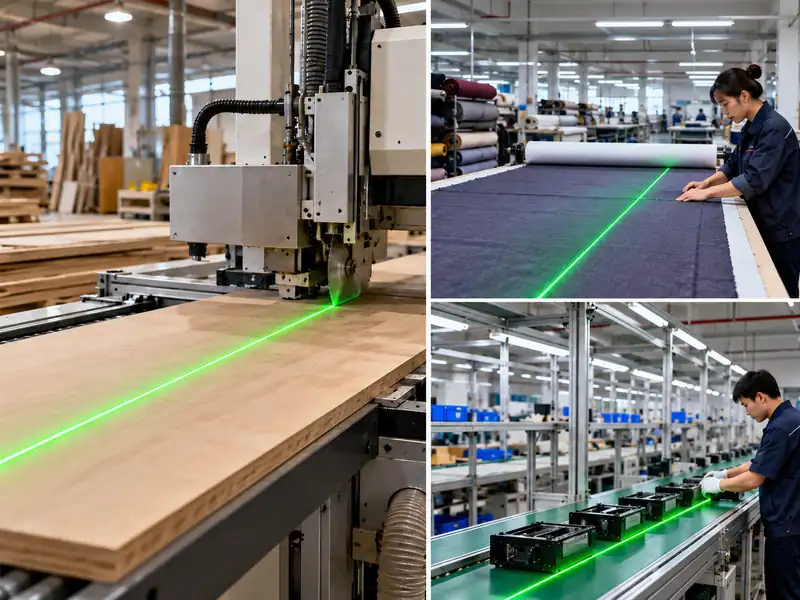
Cutting is one of the most common uses of a green line projector in industrial production. Factories that process wood, steel, stone, plastic, or other materials often need clear reference lines before cutting. A projected laser line helps workers see where to place the material and follow the correct cutting direction.
For example, in a woodworking factory, a green laser line can show the cutting position on a large wooden board. In metal processing, it can help workers align steel plates before cutting or further processing. The same idea can also be used in stone processing, where large slabs need careful positioning.
By providing a visible reference, a green line projector can help reduce positioning mistakes and make repeated cutting tasks easier. However, the actual accuracy depends on the installation, projection distance, and the equipment used for cutting.

2. Woodworking and Furniture Manufacturing
Woodworking factories often process large boards and long pieces of timber. Workers must align these materials before sawing, drilling, or assembling them. Manual marking can take time, especially when the same task must be repeated many times.
A green line projector can project a straight reference line onto the board or worktable. Workers can use the line to position the material before processing. In furniture production, it can also help with the placement of panels and parts during assembly.
This application is useful for factories that need clear positioning guides across wide work surfaces. Depending on the production setup, one or more laser lines can be installed above a cutting table or integrated into a machine.
3. Textile Cutting and Fabric Alignment
Textile and garment factories often work with wide layers of fabric. Before cutting, the fabric must be spread evenly and placed in the correct position. If the layers move or become misaligned, the final pieces may not match the required size or shape.
A green line projector can provide a visual reference on the cutting table. Workers can use the projected line to align fabric edges, position patterns, and check the placement of material before cutting begins.
For large cutting tables, a suitable projection system can make reference lines easier to see across the working area. This can be helpful in garment production, upholstery manufacturing, and other industries that process flexible materials.
The projector should be selected according to the table size, working distance, and lighting conditions to ensure that the line remains visible where it is needed.
4. Production Line Alignment and Industrial Assembly
In assembly workshops, workers often need to place components, fixtures, or products at specific positions. When the same operation is repeated throughout the day, clear visual guides can help keep the process consistent.
A green line projector can show reference lines on worktables, assembly stations, or production surfaces. Workers can use these lines to position parts before fastening, joining, or checking them. In some production setups, projected lines can also help indicate the correct direction for placing long components.
For example, machinery manufacturers may use laser lines to assist with the positioning of metal frames or large equipment parts. Automotive component factories may use them to guide the placement of parts at selected workstations.
When combined with a suitable production process, projected lines can reduce the need for repeated manual marking and help workers follow the same positioning steps.
5. Overhead Crane and Heavy Material Positioning
Factories that handle steel plates, metal coils, machinery parts, and other heavy materials need careful positioning during lifting and movement. Placing a load in the wrong position can cause delays and create additional handling work.
A green line projector installed above a working area can project a reference line onto the floor or target surface. Crane operators and ground workers can use this visual guide to help align materials with the intended placement area.
For example, in a steel factory, a projected line may indicate the reference position for placing a steel plate. In a heavy equipment workshop, it may help workers align a large component with a marked working zone.
For these applications, the projector must be selected according to the mounting position, working distance, and environmental conditions. A laser line is only a positioning aid. It does not replace crane safety procedures, load control systems, or other required safety measures.
6. Warehouse and Floor Positioning
Warehouses and logistics centers need clear floor layouts to support storage, picking, and material movement. Workers often need to know where pallets should be placed or where certain activities should take place.
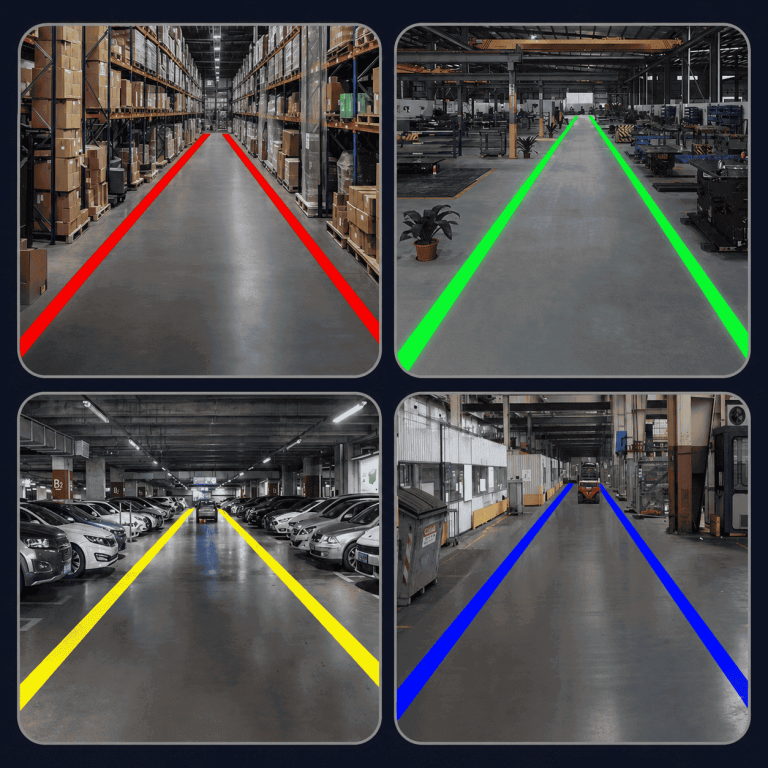
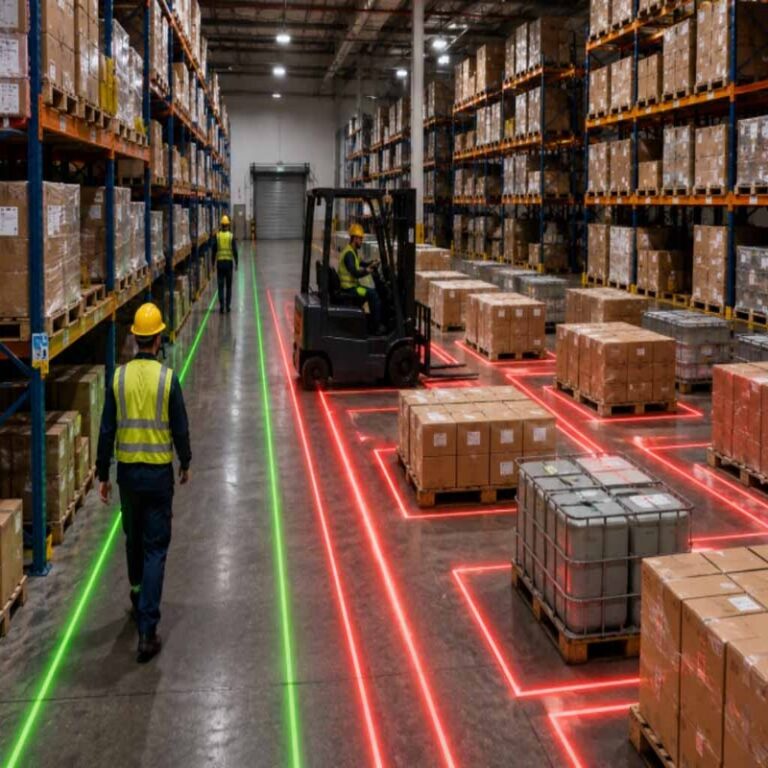
Line marking projectors can provide visual reference lines for selected floor areas. Depending on the system, they may help indicate pallet positions, storage boundaries, or material placement zones. Unlike painted lines, projected lines do not require direct contact with the floor and can be changed by adjusting the projection system.
In suitable applications, projected floor lines can support flexible warehouse layouts and help workers identify designated areas. They can be especially useful in locations where floor markings need to be updated as storage or production arrangements change.
However, projected lines may become less visible under strong ambient light or on unsuitable floor surfaces. For permanent safety markings, the projection system should be evaluated alongside other marking methods.

7. How to Choose the Right Green Line Projector
Different industrial applications require different projector specifications. Before choosing a system, consider the following factors:
Projection distance: Make sure the laser line reaches the required work area.
Line width: Select a suitable line width for the size of the material and the positioning task.
Visibility: Consider ambient light, surface color, and surface texture.
Mounting method: Check whether the projector will be installed on a machine, ceiling, frame, or overhead crane.
Working environment: Look at dust, temperature, vibration, and moisture levels.
Line direction: Choose the required projection angle and line arrangement for the application.
A suitable green laser line projector should match the actual working conditions rather than being selected by laser color alone. For industrial use, installation stability and correct alignment are also important for maintaining a reliable reference line.
A green line projector is a practical tool for industrial positioning, cutting, alignment, and material handling. It can help workers see reference lines clearly and reduce the need for repeated manual marking in suitable production environments.
From woodworking and textile cutting to assembly lines, steel processing, and warehouse positioning, green laser line projection can support a wide range of industrial tasks. The key is to select a system that matches the material, working distance, lighting conditions, and installation requirements.
If your factory needs a clear and flexible positioning guide, a green line projector may be a useful solution for improving daily workflow and supporting more consistent production.