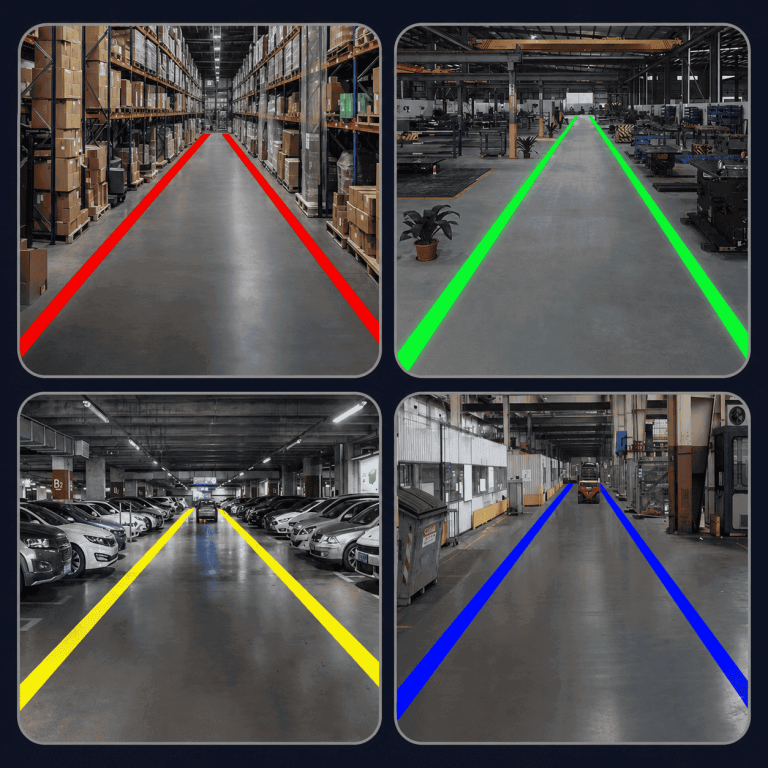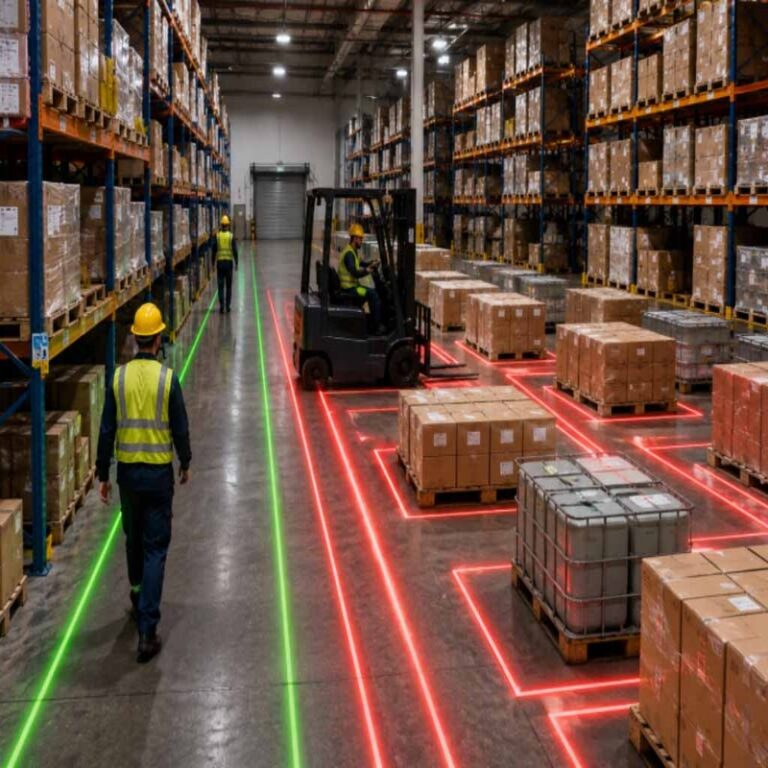

A worksite rarely announces that its visual guidance is becoming hard to read. The change is usually quieter. A floor line loses contrast, a logo becomes less sharp, or a warning mark still exists but no longer catches the eye as quickly as it should. People keep moving because the work has to continue, and the weak point only becomes obvious when the route gets crowded or the light changes.
In warehouses, commercial sites, and industrial areas, that loss of attention can come from ordinary daily work. Tires drag dust across the floor. Cleaning makes a surface shine in one area and dull in another. Pallets block sightlines for a few minutes, then disappear. Strong ceiling lights can flatten the contrast that a painted line or printed sign was supposed to create. The mark is still there, but it asks people to look twice.
This is where a Industrial Safety Projector starts to make sense as part of visual management. It does not ask the floor to carry every message by itself. Instead, the system projects a visible cue onto the area where the decision happens, whether that decision is about a boundary, a direction, a logo, or a warning symbol. The idea is simple: keep the message close to the work, and keep it visible under the conditions the site actually has.
This is why teams now discuss overhead crane safety projector earlier in project planning. The conversation is less about adding another piece of equipment and more about how people read a space while they are moving through it. If the visual cue must be seen from a distance, under strong light, or near vehicle routes, projection becomes a practical option rather than a decorative extra.
Traditional markings still have a place. Paint, tape, and printed signs can define rules clearly when the surface is stable and the environment is easy to control. The difficulty starts when the same surface is exposed to wear, cleaning, color changes, or constant traffic. In those conditions, a Industrial Safety Projector can support the existing rule without pretending that one device solves every safety or visibility problem.
For a supplier such as Noparde, the useful Industrial Safety Projector discussion begins before product selection. The site has to define what the visual cue should do, where it should land, how much light will compete with it, and how people should interpret it during daily work. A brighter image is not automatically a better answer. The better answer is the one that matches the distance, mounting position, surface color, and message.
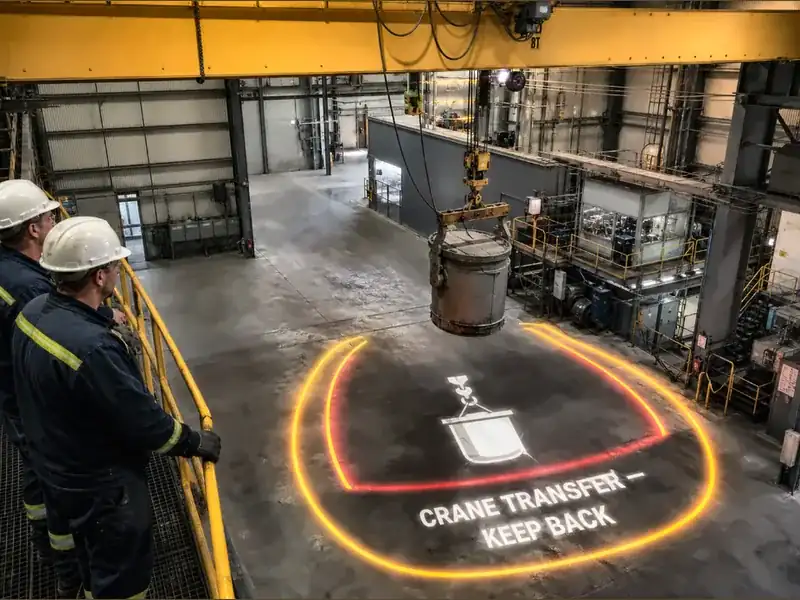
The project is best understood as a site-visibility task, not as a simple product placement. A China project gives this discussion a specific reference point. the material described custom gobo projection for an industrial or commercial site. The row records projection distance, artwork or image requirements, installation conditions (7 metres). The site needed clearer visual guidance because workers needed a visible keep-back zone around lifting and load-transfer activity. Noparde considered a Industrial Safety Projector solution so the projected cue could remain readable at the point where people needed to recognize the boundary or message.
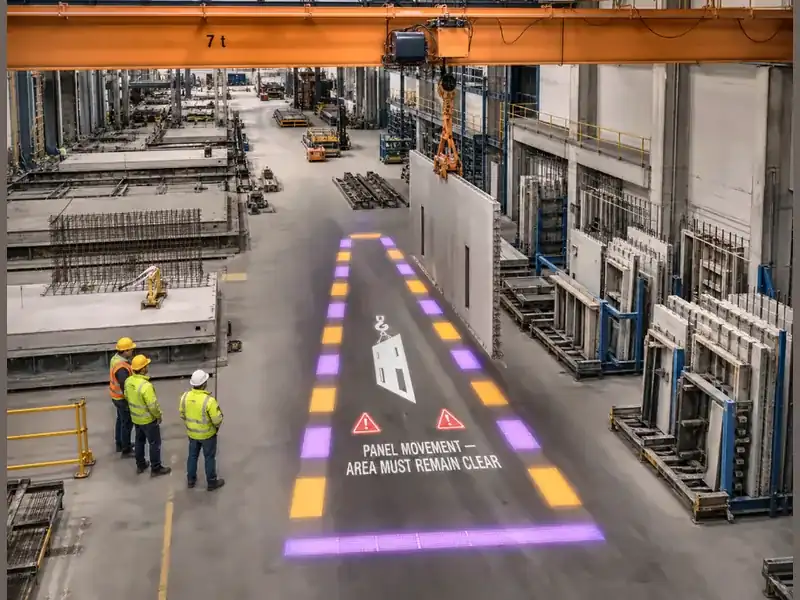
That one project shows why specification matters. A Industrial Safety Projector is affected by the same conditions that make traditional markings difficult to maintain. Mounting height changes image size and sharpness. Ambient light changes contrast. The ground color or wall surface changes how the projected cue is perceived. Quantity also matters because one strong projection in the wrong position may be less useful than several well-placed units.
A practical crane safety warning projector therefore starts with the working route, not the catalog page. The first question is not simply which model is brighter. It is where the mark should appear, how long the visible area must be, what obstacles may interrupt the view, and whether the selected color will stay readable. These questions keep the project grounded in site use rather than in a list of isolated product features.
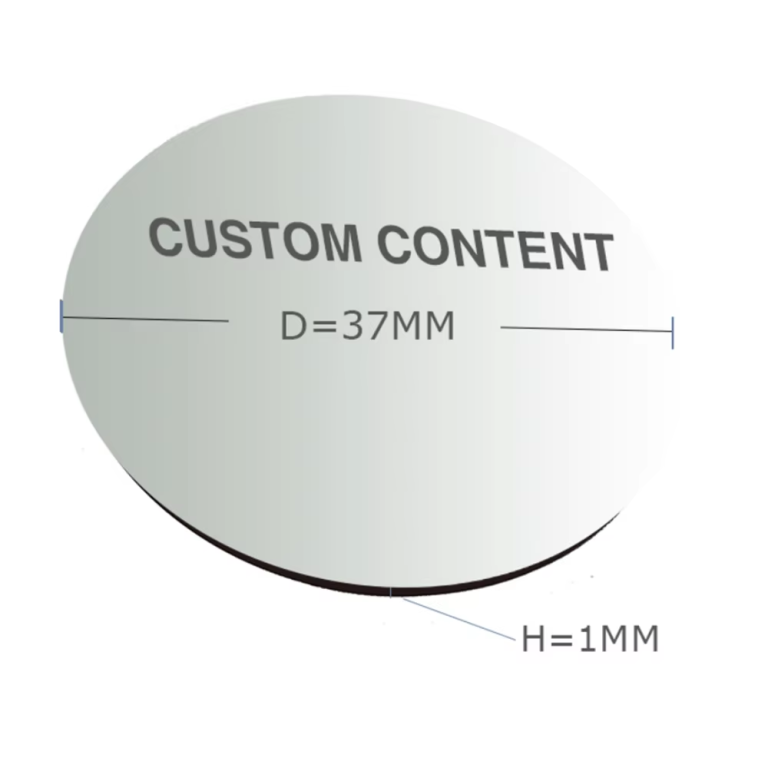
Noparde fits this kind of work by helping connect the requirement with the projection method. For line marking, that can mean matching beam color and installation height to the floor. For logo or gobo work, it can mean checking artwork shape, projection distance, and lens choice before production. The Industrial Safety Projector is only one part of the answer; the layout and visual target decide whether people will understand it quickly.
This is also why Industrial Safety Projector customization discussion matters on a website blog, not just in a sales conversation. A buyer may know that the site needs a warning line, a projected logo, or a clear floor mark, but the practical details are often scattered across photos, rough dimensions, and short notes from the worksite. Turning those notes into a workable projection plan is where product knowledge becomes useful.
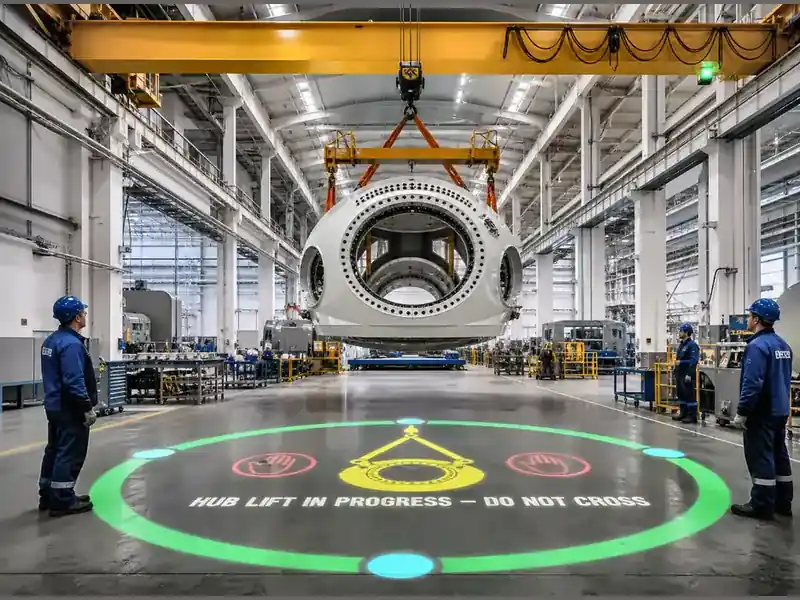
In broader terms, interest in floor warning projector for crane is tied to a change in how sites think about visual communication. Many facilities are trying to make instructions more visible without adding clutter to already busy areas. A Industrial Safety Projector can help because the projected line or image appears where the work is happening. It does not replace signs, training, supervision, or traffic rules. It gives those existing systems a clearer visual anchor.
The best projects usually start with a modest question: what does the person on site need to notice at this exact point? Once that is clear, Noparde can discuss the projector light, lens, color, mounting position, and image requirement in a more useful way. A Industrial Safety Projector works best when it is treated as part of the site language, not as a standalone product placed after the real planning is finished. This keeps the Industrial Safety Projector tied to a clear operational purpose.