
In a modern factory, workers and machines often share the same space. Operators move between production lines, technicians inspect equipment, and maintenance teams work around machines every day. In these busy environments, clear safety warnings are important for reducing confusion and helping workers recognize potential hazards.
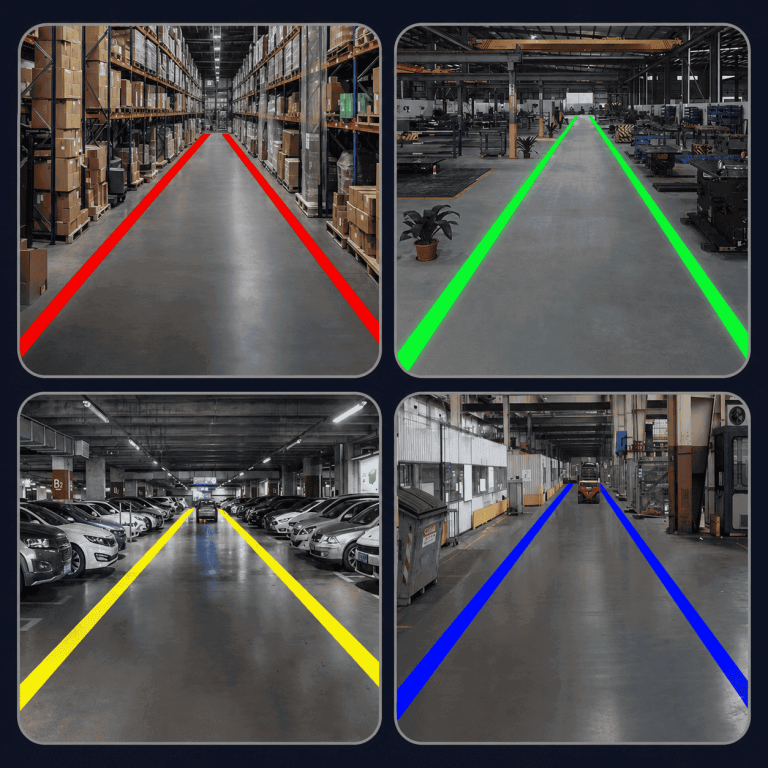
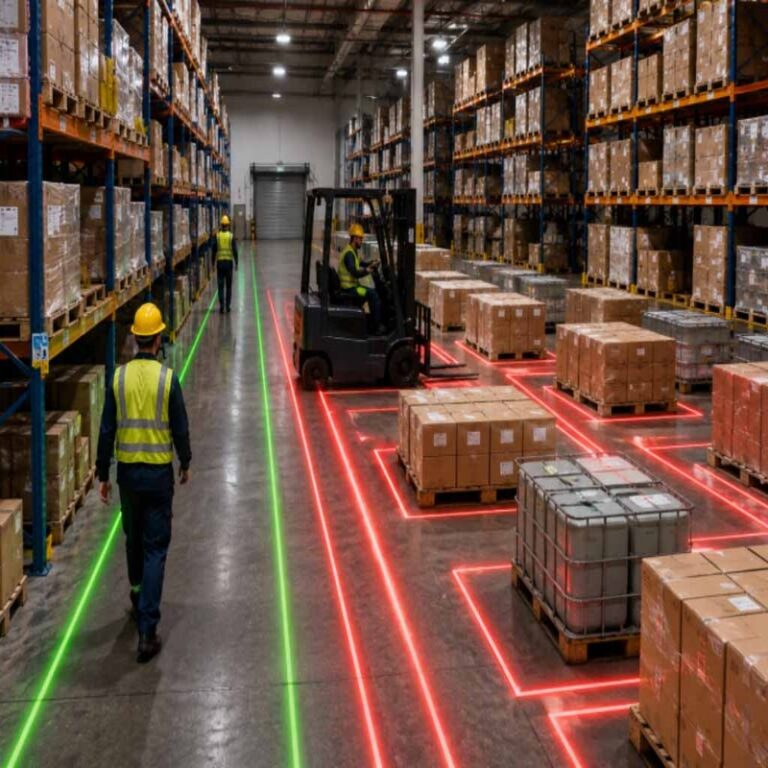
Traditional floor paint and fixed signs are common ways to mark industrial areas. However, painted lines can wear down over time, and fixed signs may not always show the exact boundary of a changing work area. This is where laser light floor marking offers a practical alternative. By projecting visible lines, symbols, and custom safety messages onto the floor, businesses can make important warnings easier to notice without relying entirely on paint or adhesive tape.
For factories that need flexible safety information, this technology provides another way to improve workplace organization and communicate risks.
Imagine a factory where an automated production line operates throughout the day. Workers collect finished products, check machine conditions, and move materials between workstations. When a machine is running, people need to know where they should stand and which areas require extra attention.
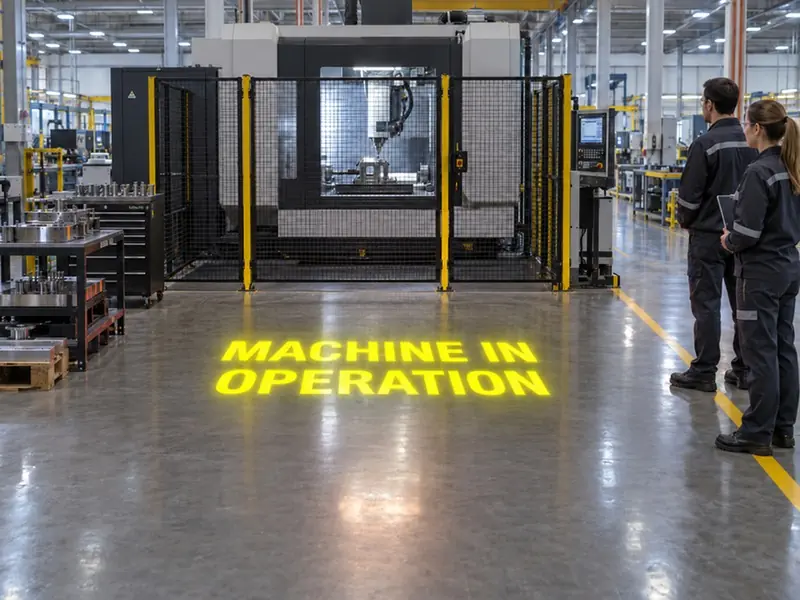
A simple line on the floor can show a boundary, but a clear warning message can explain why that boundary matters. For example, a projected message such as “KEEP CLEAR” or “MACHINE IN OPERATION” can help workers understand the purpose of a restricted area.
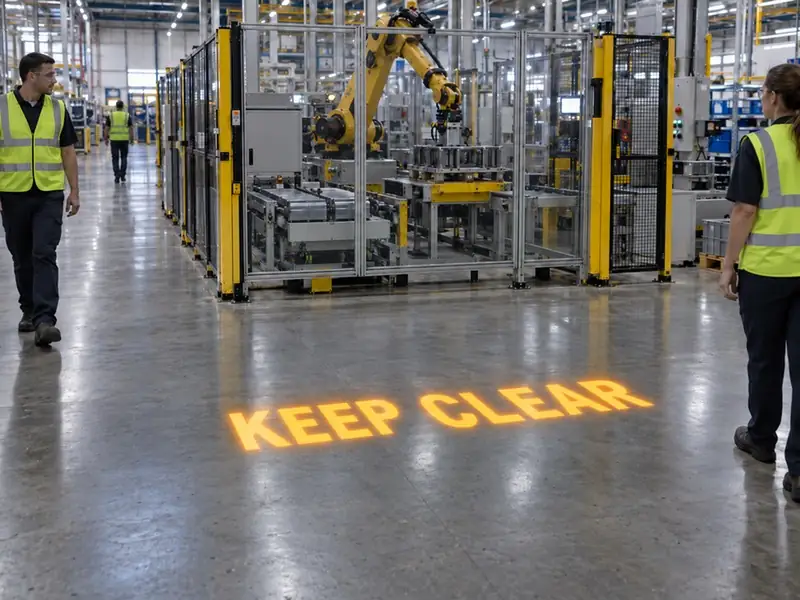
Unlike paint, projected markings do not form a physical layer on the floor. This means they will not be worn away by foot traffic or equipment wheels. Depending on the system, users can also change the projected content when production requirements change.
Industrial workshops often have bright overhead lighting, large machines, and floors with different colors and finishes. These conditions can affect how easily workers see projected lines and messages.
A high-brightness projection system can help make floor markings more visible over a suitable distance. Depending on the equipment, users may be able to select different colors, line shapes, warning symbols, or text designs to suit the working environment.
For example, a manufacturer may project a visible boundary around an automated machine or display a warning near an equipment testing area. In a large workshop, a properly positioned projection can help workers recognize the intended boundary before approaching the machine.
However, brightness alone does not guarantee good visibility. Projection distance, ambient light, floor color, beam shape, and installation angle all affect the final result. Businesses should test the equipment in the actual working environment before choosing a solution.
With the right setup, laser light floor marking can make important floor-level information easier to recognize and help create a more organized industrial workspace.
Different machines create different risks. A robotic assembly station may require a restricted-area warning, while a maintenance zone may need a reminder to keep the surrounding space clear.
A laser message projector can provide a flexible way to display customized text, symbols, and warning patterns when the selected model supports these functions. Instead of using the same general warning throughout a factory, businesses can choose messages that match the needs of each area.
Common examples include:
DANGER — MACHINE IN OPERATION
KEEP CLEAR
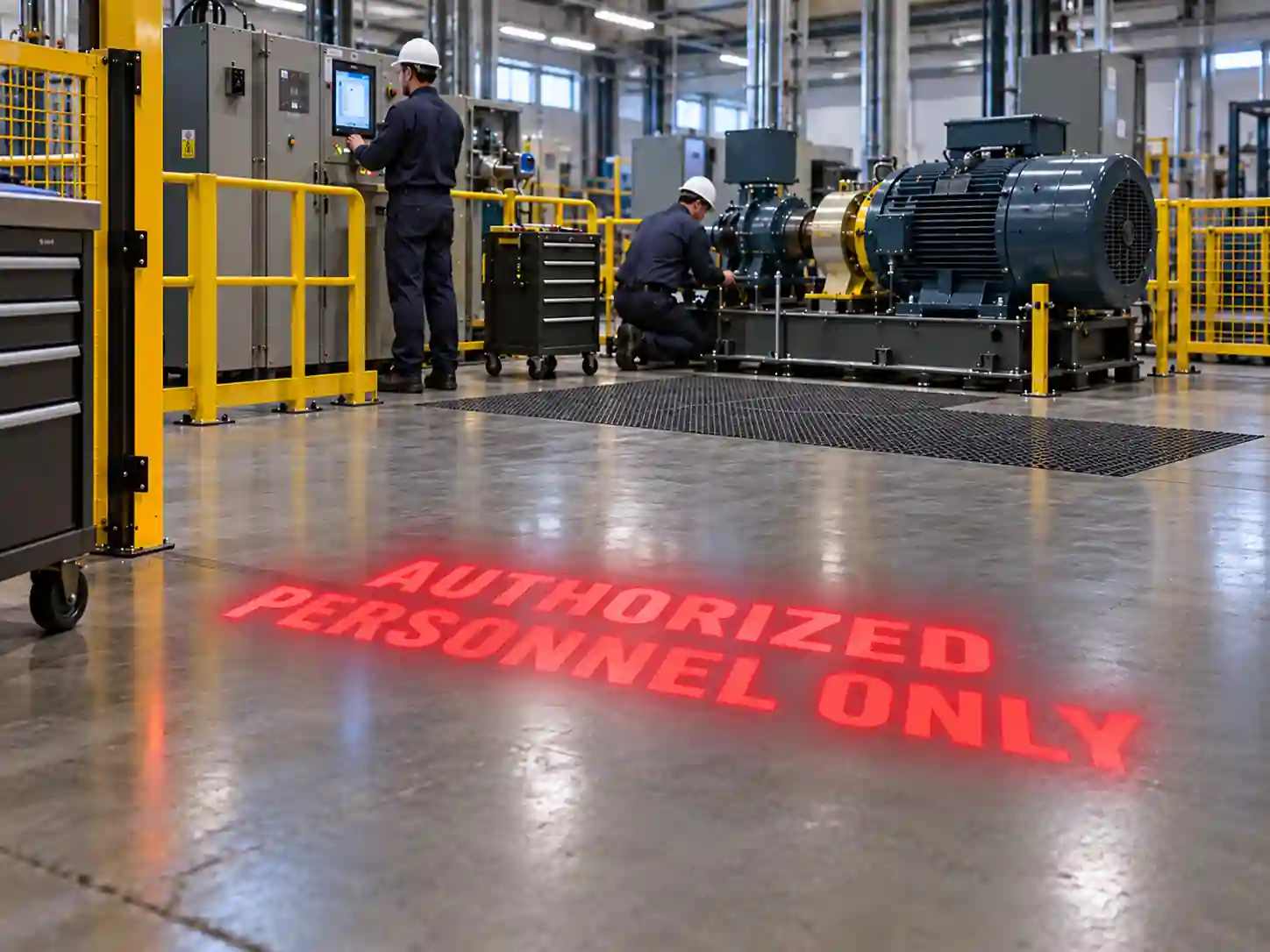
AUTHORIZED PERSONNEL ONLY
CAUTION — MOVING EQUIPMENT
STOP BEFORE ENTERING
Some industrial projectors also support smartphone connectivity. With a compatible model, authorized users can connect a phone to adjust settings or change the displayed content. This can be useful when a production line changes, a temporary work area is created, or a different warning is needed for a new task.
Before purchasing, buyers should confirm the supported connection method, customization options, and control functions. Not every projector offers the same features, so the product specifications should match the intended application.
The value of projected markings becomes clearer when they solve a specific problem in the workplace.
Automated Production Lines:Automated production lines often have defined operating zones where workers need to maintain a safe distance from moving equipment. Projected floor lines can help identify these boundaries, while custom messages can remind workers to follow established safety procedures.For example, a factory could display “KEEP CLEAR” near a machine entrance while the equipment is operating. The message provides a visual reminder, while appropriate machine guards and access controls remain essential for preventing contact with hazardous parts.
Robotic Work Cells:Robots are widely used in assembly, welding, packaging, and other industrial processes. Their movement areas may require clear boundaries to help workers understand where additional caution is needed.A suitable laser light floor marking system can project lines around selected work areas. These markings can improve visual guidance, but they are not a substitute for safety-rated barriers, interlocks, sensors, or other required protective systems.
Equipment Testing Areas:Manufacturers often test motors, mechanical components, and industrial equipment before delivery. During testing, some areas may need to remain clear of unauthorized personnel.A projected warning can make a restricted boundary more noticeable and communicate the intended restriction directly on the floor. When supported by the system, the message can be changed to suit different testing procedures.
Maintenance and Repair Zones:Maintenance work may temporarily change how an area is used. Technicians may need space around a machine, and other workers may need to stay outside the work zone.Projected lines and warning messages can help identify this temporary boundary. For maintenance involving hazardous energy, however, proper lockout/tagout procedures and other required controls must still be followed. A projected warning alone cannot prevent accidental machine startup.
Before investing in a projection system, consider the actual needs of the workplace.
First, check the required projection distance and marking size. A message that looks clear from a short distance may be difficult to read across a large production area.
Second, evaluate the lighting and floor surface. A demonstration under real working conditions can help determine whether the projected lines and text are visible enough.
Third, confirm the available customization options. If different machines need different warnings, check whether the system supports custom messages, interchangeable patterns, and smartphone control.
Noparde provides industrial projection solutions for applications such as floor marking and customized safety warnings. When comparing products, businesses should focus on their actual projection needs, operating environment, and safety requirements rather than choosing equipment based on brightness alone.
Industrial workplaces need clear ways to communicate hazards and organize movement around machinery. Traditional paint and fixed signs remain useful, but projected markings can provide additional flexibility when production layouts or warning requirements change.
With suitable equipment, laser light floor marking can help identify machine boundaries, display customized safety messages, and make selected restricted areas easier to recognize. Smartphone connectivity, when supported, can also make it more convenient for authorized users to update projected content.
The most effective solution combines clear visual warnings with appropriate machine safeguards, workplace procedures, and laser safety controls. By evaluating these needs before purchasing, manufacturers can select a projection system that supports a more organized and safety-conscious working environment.