
Loading docks bring trucks, forklifts, pallet jacks, and workers into a small working area. A truck may be reversing toward the building while a forklift is moving inside the trailer and employees are preparing the next load. When people cannot see or understand each other’s movement, a normal loading task can quickly become dangerous.
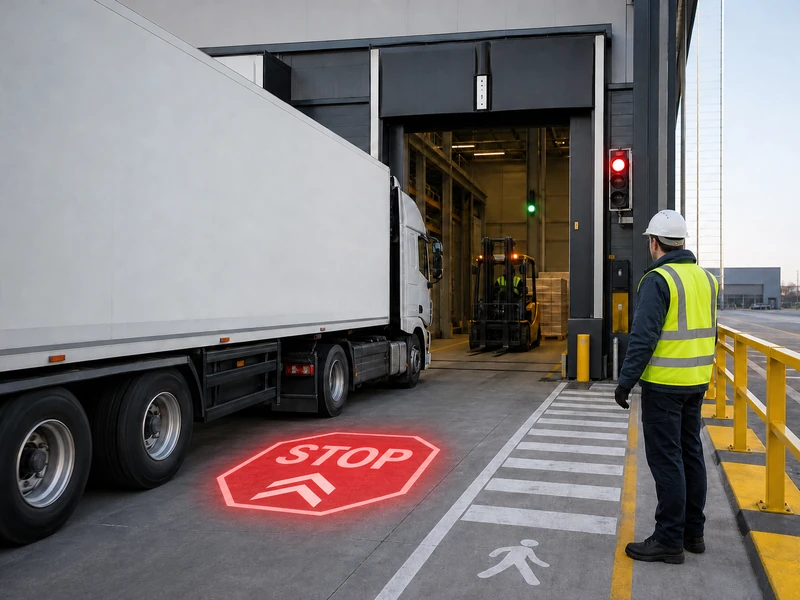
Industrial warning lights provide a simple visual signal that can be understood from a distance. Red and green dock lights can show whether a trailer should remain in place. Flashing beacons can warn that equipment is moving, while projected lights can mark a pedestrian boundary or vehicle approach zone.
The rear of a large truck contains major blind areas. When an articulated vehicle reverses into a bay, parts of the trailer may block the driver’s view. Workers near the dock may also have limited escape space if a vehicle moves toward them.The UK Health and Safety Executive states that visibility is especially important during reversing where pedestrians may have no escape route.
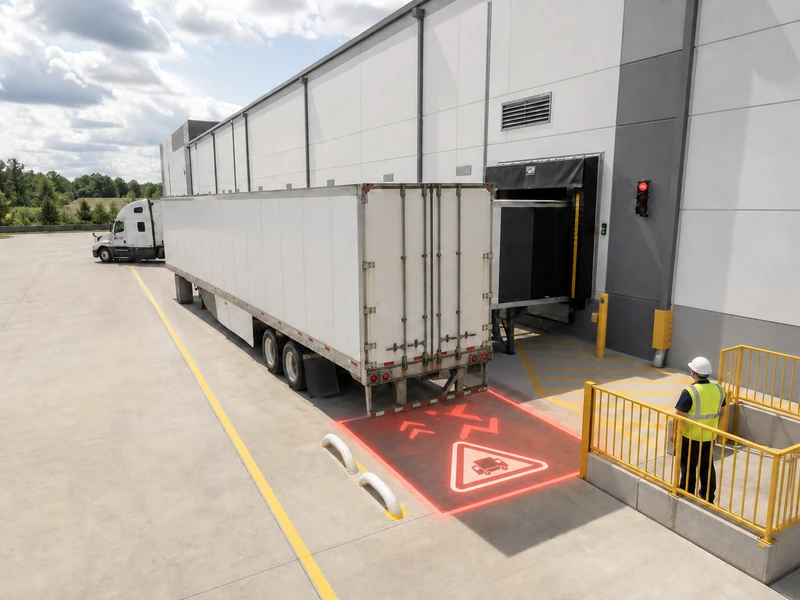
Noise adds another problem. Reversing alarms, forklifts, conveyor systems, and loading equipment may all operate at the same time. Workers can hear an alarm without knowing which vehicle it belongs to. Industrial warning lights add a visual message that supports the audible warning.
A dock traffic light normally uses red and green signals. The outside light communicates with the truck driver, while the inside light guides forklift operators and dock workers. A common system shows green outside when the truck may approach or leave and red when it must remain at the bay. The exact signal rules should be clearly defined for each facility.
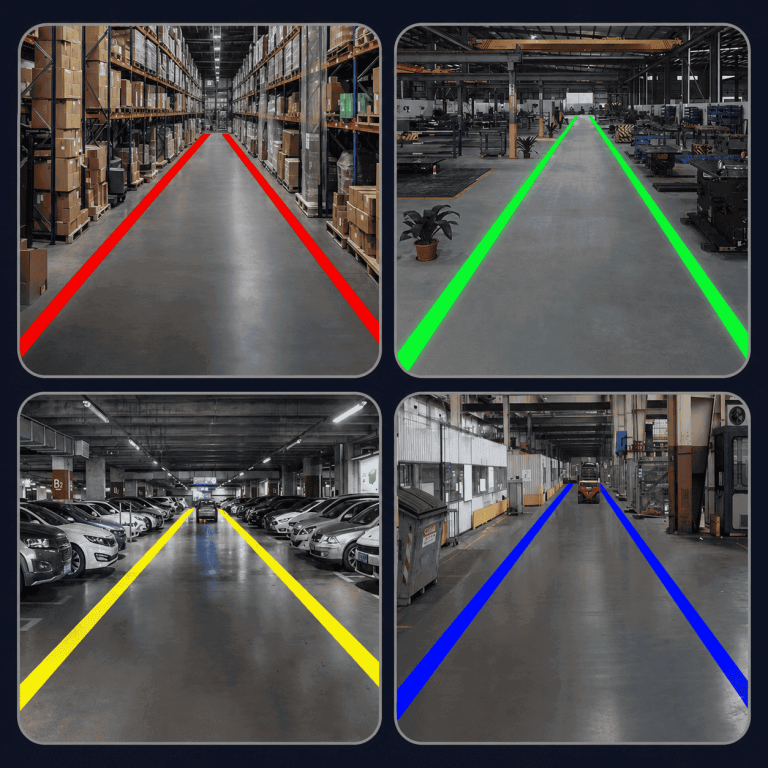
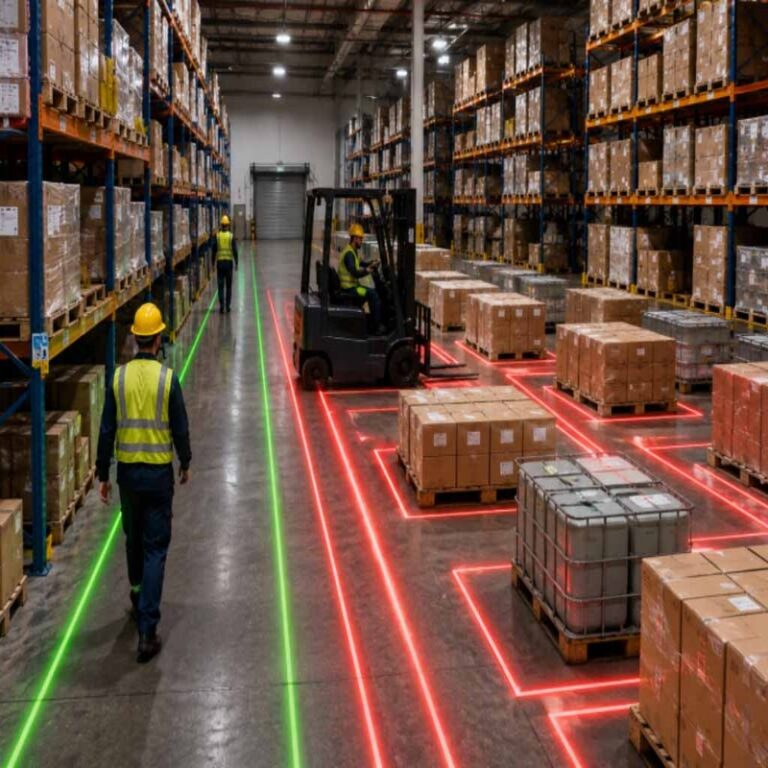
Flashing beacons are useful when a dock leveller, powered door, or other machine is moving. Blue or red projection lights can appear on the floor before a forklift reaches a shared route. These forklift pedestrian warning lights give people a visible point of reference before the vehicle enters their immediate space.
For a high-traffic facility, industrial warning lights for loading docks may combine dock signals, vehicle restraints, sensors, projected warning zones, and audible alarms. These devices should work as one system rather than provide conflicting instructions.
Sensor activated industrial warning lights respond to a vehicle, pedestrian, door, or dock position. A sensor may detect that a trailer has reached the bay or that a forklift is entering a crossing. The control unit then changes the signal or activates a flashing light.
An interlocked system can help reduce human error. For example, the outside light can remain red while a forklift is inside the trailer. The light changes only after the loading process is complete and the equipment has left the vehicle.
Sensors must be positioned carefully. A poorly adjusted sensor may activate when there is no real risk, which can cause workers to ignore repeated warnings. The detection area should match the actual route, speed, and movement of people and equipment.
How to Choose the Correct Warning Lights
The first step is to map the traffic flow. Record where trucks reverse, where forklifts enter trailers, where pedestrians walk, and where drivers wait. Industrial warning lights should be placed where a person needs to make a decision, not simply where installation is easiest.
Brightness must match the environment. A light that is clear during a night shift may be difficult to see beside an open dock door in strong daylight. The viewing angle also matters because a signal facing the wrong direction can be hidden by a trailer, door frame, or stored goods.
Color rules should remain consistent across the whole facility. Drivers should not see green at one bay meaning “safe to leave” while the same color means “remain parked” at another. Instructions should be included in driver induction and displayed clearly near the entrance.
The lights should also match the working conditions. Dust, rain, vibration, low temperatures, and vehicle impact can affect ordinary products. Noparde can provide warning and projection options based on the required voltage, protection level, installation distance, and visual message.
HSE guidance says reversing should be avoided where possible because it is a major cause of fatal accidents. When reversing cannot be removed, sites should separate pedestrians, improve visibility, use suitable warning devices, and ensure workers understand the traffic rules.
Industrial warning lights are useful where trucks, forklifts, and pedestrians need clear communication. Correctly placed signals can show whether a vehicle should stop, remain parked, or move away from the dock.
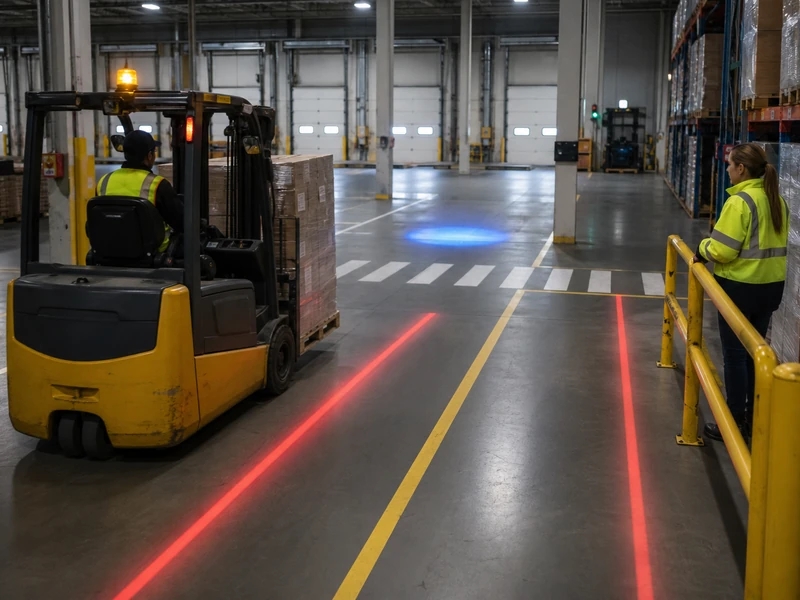
The best system combines clear color rules, correct brightness, reliable sensors, regular inspections, and physical traffic controls. When these parts work together, industrial warning lights can make loading operations easier to understand without relying only on shouted instructions or alarms. Noparde can customize the light color, projected content, control method, and installation plan for different loading environments.