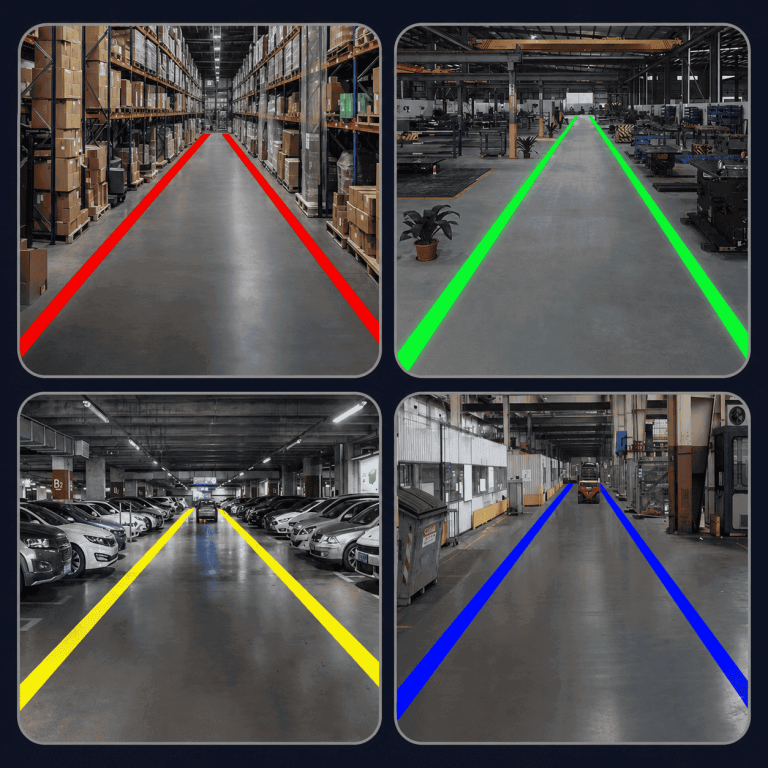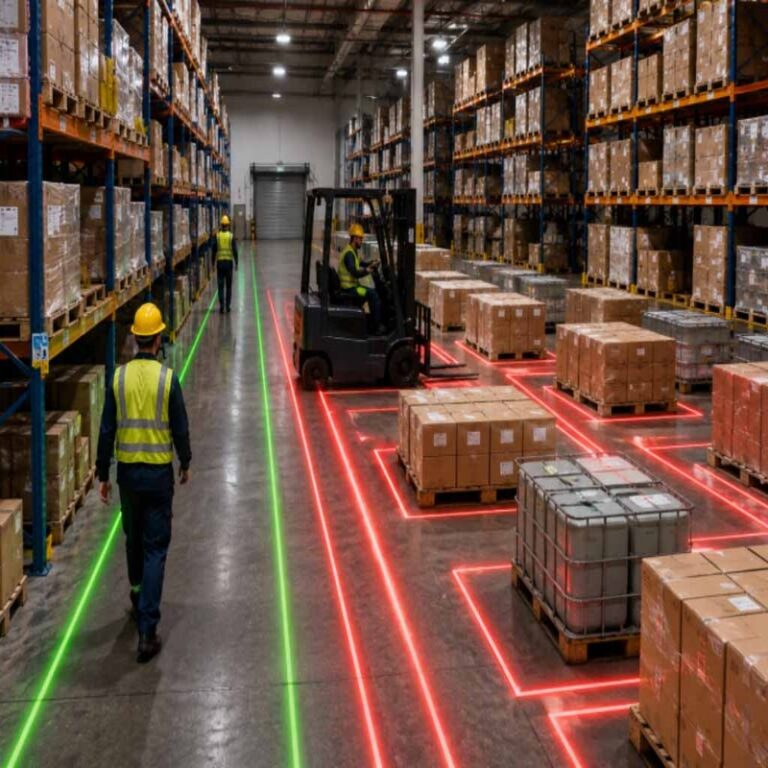

When people and automated vehicles share the same factory floor, even a simple crossing point can become difficult to manage. AGVs and AMRs may move along fixed or changing routes while workers need to cross between production areas, inspection stations, storage points, and maintenance zones. In these locations, making the pedestrian crossing easy to notice can be an important part of a wider safety plan.
A zebra crossing projector creates a bright zebra-style crossing directly on the floor. Instead of adding a permanent painted marking, the projected crossing can be placed where workers need to cross an automated vehicle route. This makes it a useful visual tool for factories that need clear pedestrian routes without making permanent changes to the floor.
AGVs are widely used to move materials without a driver. OSHA describes automated guided vehicles as driverless vehicles that follow a guide path, and its technical material notes that automated systems can introduce workplace hazards that need to be identified and controlled.
The challenge is not only the movement of the vehicle. It is also the interaction between the vehicle route and normal worker activity. An AGV may move between two production cells while operators need to cross the same area to inspect equipment. A route that looks clear during installation may become harder to understand after production equipment, carts, workstations, or temporary materials are added.This is where a clear visual crossing can help. A visible crossing gives workers a simple reference point before they enter an automated vehicle route.
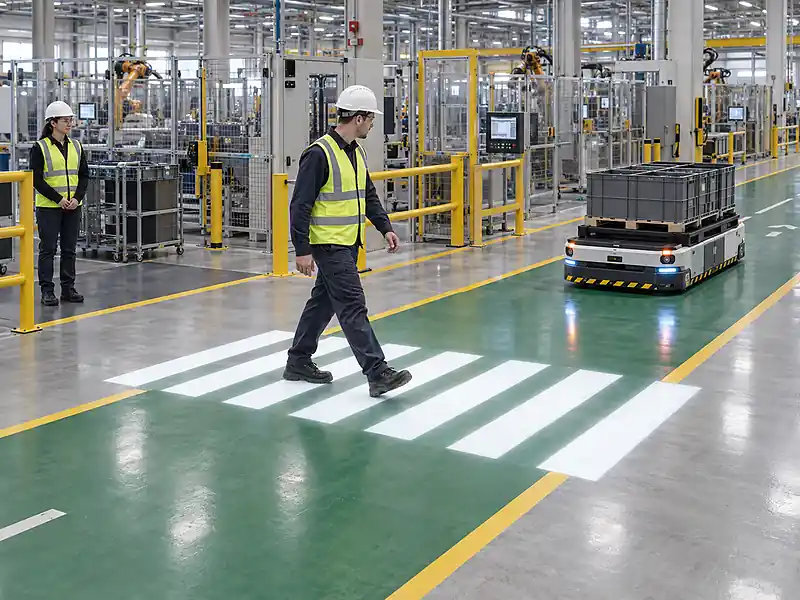
A projected crossing provides a visible visual boundary between the AGV route and the pedestrian crossing area. When installed correctly, it can help workers recognize a designated crossing point before entering the vehicle path.
A pedestrian safety projector may be useful when a factory needs a visible crossing or warning area without adding another physical structure to the floor. It can also be considered where factory layouts change and permanent markings are difficult to update.The main advantage is flexibility. A projected crossing can be moved or adjusted when the layout changes, while painted floor markings normally require additional floor work.The best location is not necessarily a main warehouse aisle. In modern manufacturing facilities, several smaller interaction points between people and automated equipment may also need clear visual guidance.
Production Line Transfer Points:Workers may need to move between two production cells while an AGV transfers materials through the same area. A projected crossing can visually identify where people should cross the automated route.
Inspection Areas:Quality inspectors may regularly move between machines and inspection stations. If an automated vehicle route passes through this area, a clear projected crossing can make the intended pedestrian route easier to recognize.
Automated Material Transfer Stations:AGVs and AMRs often deliver components to specific work areas. Workers may approach these stations from different directions, creating several potential crossing points. A projected zebra crossing can help define one preferred crossing location.
Maintenance Access Points:Maintenance workers may need to enter equipment areas that are normally separated from pedestrian traffic. When the access route changes during maintenance work, an adjustable projection can provide a flexible visual guide.
OSHA recorded an AGV-related incident at an facility in Columbus, Ohio. The case involved employees working around automated guided vehicles in a high-density storage area. OSHA reported that an employee was struck by another AGV and pinned between two vehicles while reinserting a faulted AGV into an active operating path. The inspection also identified problems with bumper-stop protection and inspection practices.The case shows why AGV safety cannot depend on only one device or one warning method. Vehicle controls, protective systems, route planning, inspection, worker training, and clear pedestrian movement all have a role. A projected crossing can be used as an additional visual layer where people and automated vehicles share floor space.A projected crossing may be a good option when a factory has changing layouts, shared AGV and pedestrian areas, or locations where permanent floor markings are not practical.
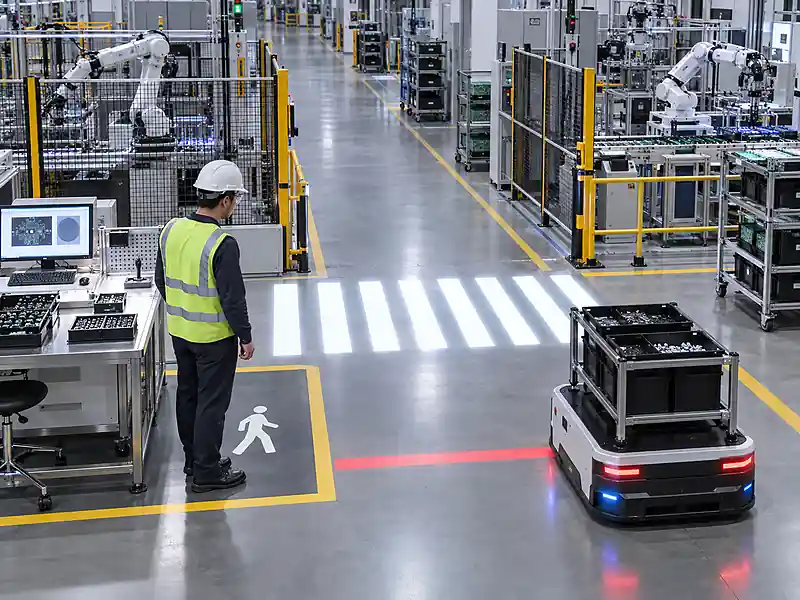
It can also be useful when a company wants to test a new pedestrian route before making permanent changes to the floor. For example, a manufacturer could first project a crossing at an AGV interaction point, observe worker movement, and then decide whether the location should become a permanent pedestrian crossing.
Noparde provides projection lighting solutions for industrial and commercial applications. For an AGV route, the right solution should be selected according to the actual mounting height, projection distance, ambient lighting, and required crossing size.
Before installing a projected crossing, safety and facility teams can start with five basic questions:
Where do pedestrians normally cross the AGV route?
Can the projected image be clearly seen under normal factory lighting?
Is the projection large enough for the required viewing distance?
Does the crossing remain visible from the main pedestrian approach?
Does the projection work together with existing AGV safety controls?
These questions help ensure that the projector is used for a real workplace need rather than simply adding another visual signal.
AGV and AMR systems can make material movement faster and more organized, but automation does not remove the need for clear pedestrian routes. Where people and automated vehicles share the same floor space, simple visual communication can make the intended movement easier to understand.
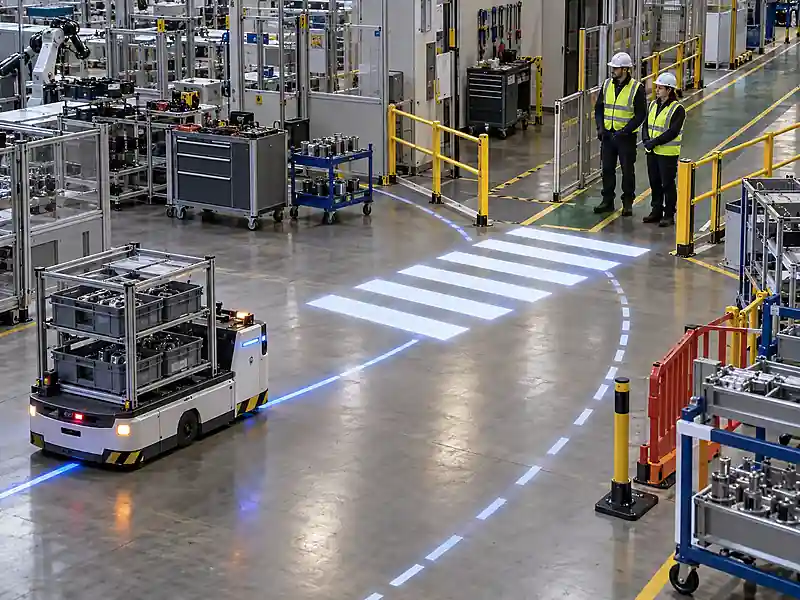
A zebra crossing projector can provide a flexible visual crossing for production areas, inspection points, automated transfer stations, and maintenance routes. Used together with proper AGV controls, risk assessment, worker training, and site procedures, it can become a practical part of a broader pedestrian safety strategy.