
In a large logistics center, the most dangerous areas were not the wide main aisles. The real problems appeared at corners, rack exits, loading areas, and intersections that looked normal during daily work.Forklifts moved between storage racks throughout the day, while workers pushed carts, moved pallets, and walked between picking areas. At several intersections, tall racks blocked the view from both sides. A worker could step out from an aisle at the same moment a forklift approached from another direction.The warehouse already used floor tape and wall-mounted warning signs, but both had limits. Floor markings became worn after repeated forklift traffic, while wall signs were easy to miss when workers were focused on moving goods.The site needed a warning method that could be seen directly where the risk happened.
The Safety Problem
The main safety issue was visibility.At forklift crossings, workers often needed to make a quick decision before entering the traffic route. However, traditional warning signs were not always placed in the direct line of sight.Floor stickers were also affected by daily traffic. Forklift wheels, pallet trucks, dust, cleaning, and normal wear slowly reduced their visibility.The warehouse wanted a solution that could make key warning areas easier to identify without adding more physical objects to the floor.
The Solution: Safety Sign Projector
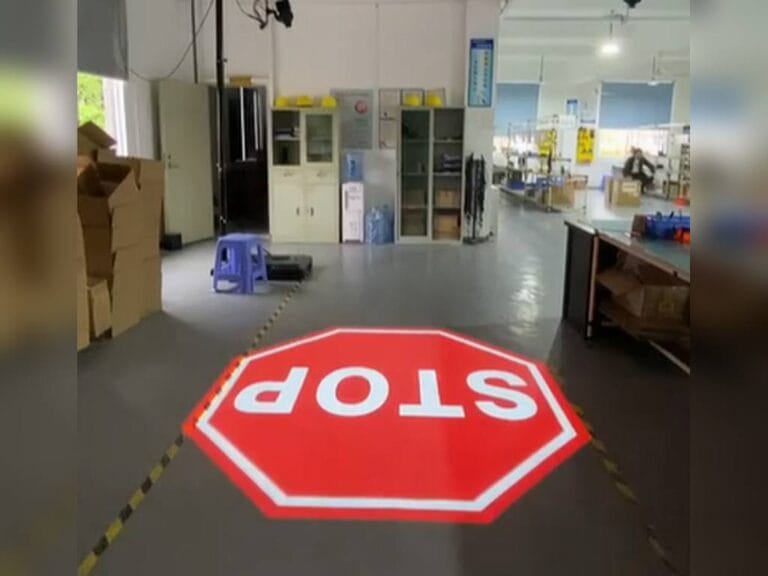
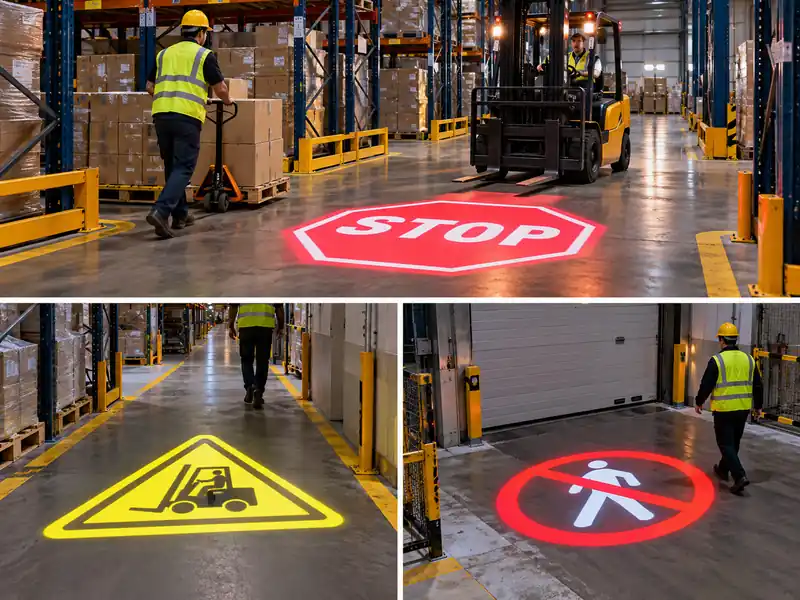
The warehouse installed a safety sign projector at important forklift intersections and blind areas.Instead of placing another fixed sign on the wall, the projector displayed a clear warning directly on the floor.Depending on the location, the projected pattern could be STOP, WARNING, NO ENTRY, a forklift warning symbol, a pedestrian warning symbol, direction arrows, or other custom safety graphics.At a forklift intersection, a large STOP sign was projected directly before the crossing. Workers approaching the area could see the warning before entering the vehicle route.This changed the warning from something people needed to search for into something that appeared directly in their path.
How Warehouse Safety Projection Was Used
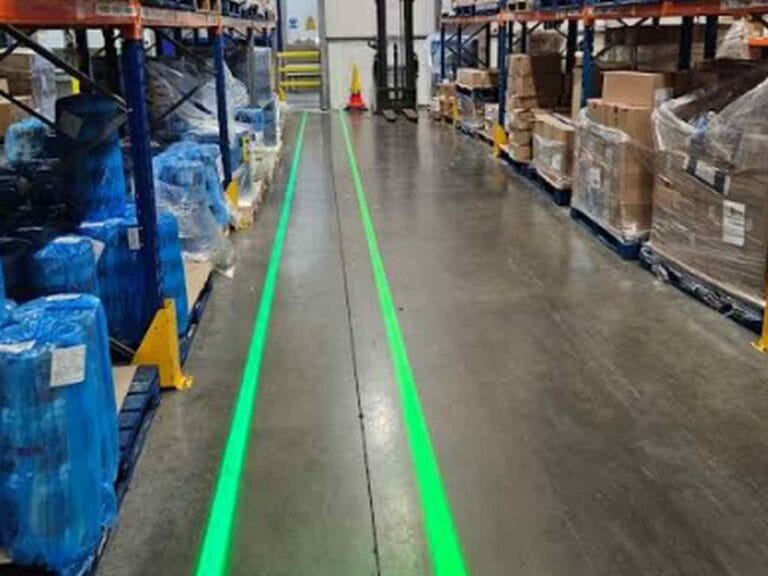
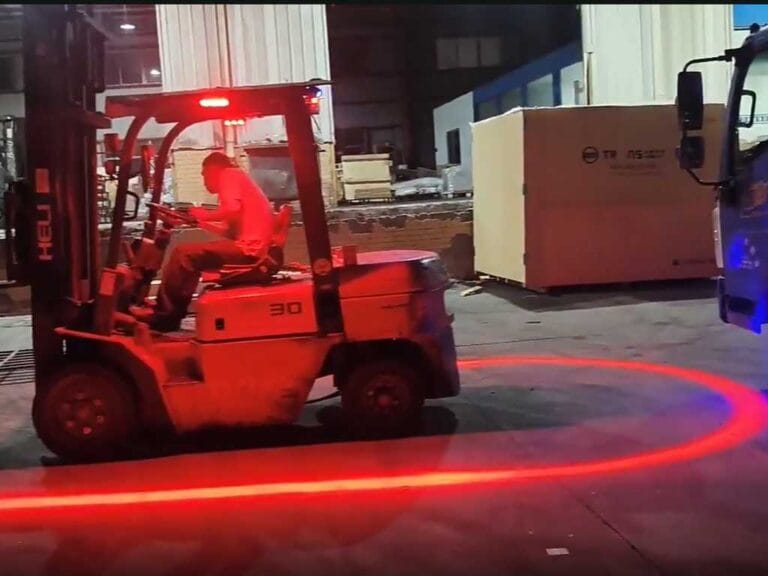
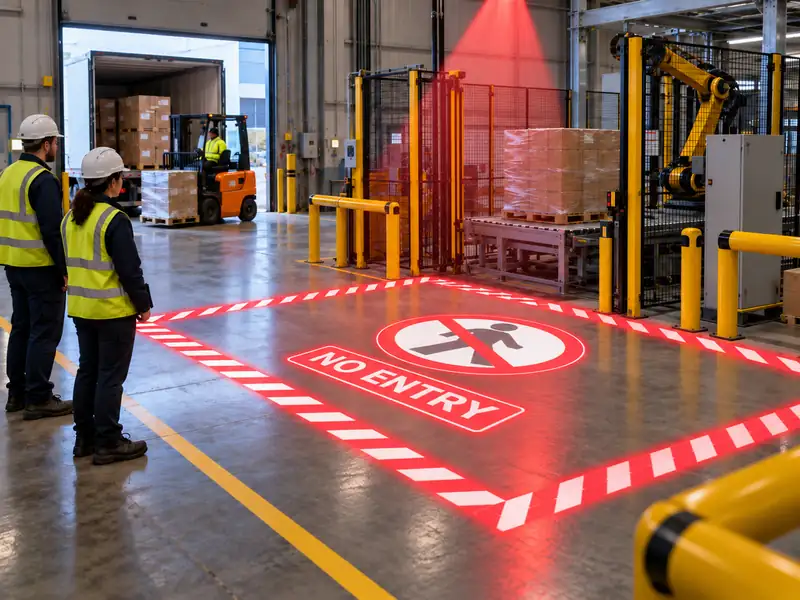
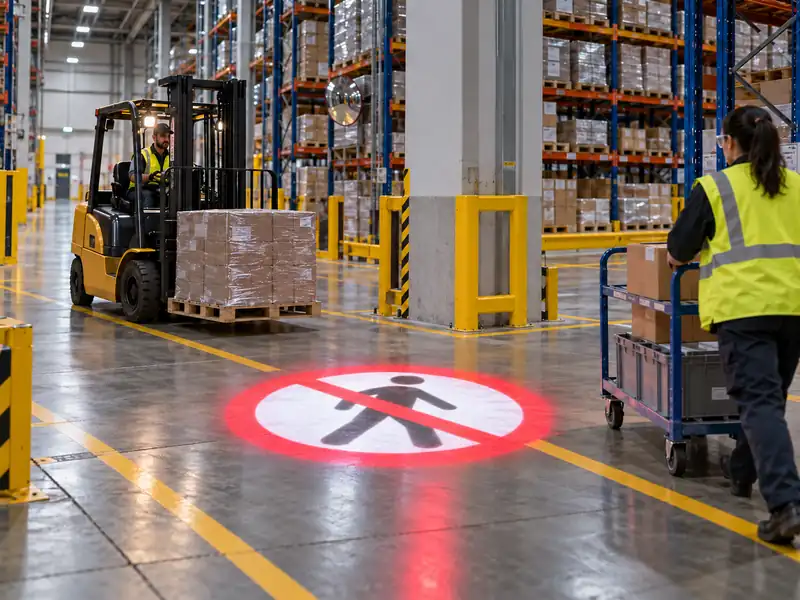
Different areas of the warehouse used different projection patterns.Near rack exits, forklift warning symbols were projected onto the floor to remind workers that vehicles could appear from the other side.At equipment zones, NO ENTRY symbols were used to mark restricted areas.At loading areas, projected boundaries helped show where workers should stay clear during vehicle movement.This type of warehouse safety projection allowed the warehouse to match each warning pattern to the actual risk in that area.If the warehouse layout changed, the projection position could also be adjusted. There was no need to remove old floor stickers, repaint the floor, or wait for new markings to dry.
A Better Fit for Changing Warehouse Layouts
Logistics centers often change their working layout.Pallet positions can move. Temporary storage areas can appear during busy seasons. Forklift routes may also change when loading volume increases.Because of this, permanent floor markings are not always flexible enough.With projected safety signs, the warehouse can change the warning pattern or move the projection point when needed.For example, a STOP sign can be moved to a new intersection, while a forklift warning symbol can be added near a new rack exit.This flexibility is one of the main reasons the system works well in busy warehouse environments.
Improved Visibility at Forklift Crossings
After the safety sign projector was installed, warning areas became easier to notice.Workers approaching a crossing could see the projected STOP sign directly on the floor. Forklift operators could also identify the warning zone more clearly.The projection was bright and easy to recognize, especially in indoor warehouse areas where lighting conditions stayed relatively stable.Unlike floor tape, the projected image was not physically damaged by forklift wheels.The warehouse still kept its existing mirrors, barriers, safety rules, and worker training. The projection was used as an extra visual warning layer rather than a replacement for other safety systems.
Different Warning Patterns for Different Risks
Another advantage was the ability to customize the projected image.Some areas needed a simple STOP sign. Others needed a forklift symbol, pedestrian warning, or restricted-area graphic.The safety sign projector could be matched to the site’s own safety management system.Simple patterns were preferred because workers needed to understand them quickly. Large symbols with clear colors were easier to recognize than complicated graphics with too much text.This made the system suitable for both warehouse traffic control and general industrial safety marking.
Why the Warehouse Chose Projection
The warehouse selected projection because it solved several practical problems at the same time.The warning could be placed exactly where workers needed to see it.The image was not worn away by vehicle traffic.The projection position could be changed when the layout changed.The pattern could also be replaced when a different warning message was needed.For a facility with frequent forklift movement, these advantages made warehouse safety projectors more flexible than relying only on permanent floor markings.
Result
The biggest improvement was not simply a brighter floor sign.The important change was that the warning appeared at the exact place where workers needed to make a safety decision.At an intersection, they saw STOP before entering the forklift route.Near a rack exit, they saw a forklift warning before stepping into the aisle.At restricted equipment areas, they saw a clear NO ENTRY symbol before moving closer.For this logistics center, the safety sign projector became a practical part of daily safety management.It helped turn warning information from a fixed sign on the wall into a visible part of the working environment.In busy warehouses where forklifts, workers, and goods are constantly moving, putting the warning directly where the risk begins can make the safety message much harder to miss.