
Steel plants move heavy materials every day. Bridge cranes carry steel coils, steel plates, molds, and machine parts across large production areas. These loads may weigh several tons, but workers on the floor may not always notice that a crane is moving above them. A crane warning projector creates a clear warning image on the floor, making the moving danger easier to recognize.
A steel plant is rarely quiet. Cutting machines, rolling equipment, forklifts, ventilation systems, and other production lines may operate at the same time. Workers may also wear hearing protection, so they may not clearly hear a horn or warning buzzer.
The crane may also move above storage racks, machines, or production lines. A worker looking forward or concentrating on a task may not see the bridge crane or steel coil overhead. This creates a risk when the crane passes over a working area or crosses a pedestrian route.
An overhead crane warning light helps address this problem by placing a visible warning in the worker’s normal field of view. Instead of asking people to keep looking upward, the system projects the danger information directly onto the floor.
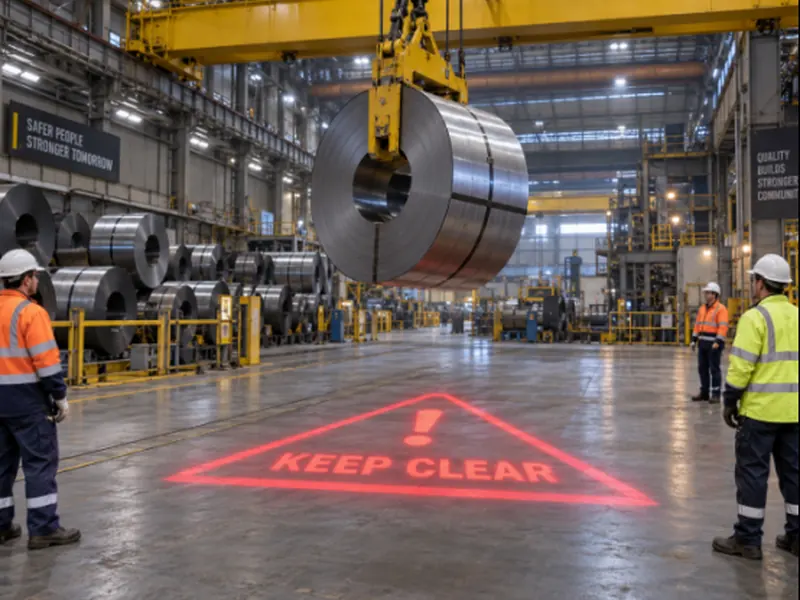
A crane warning projector is normally mounted on the bridge crane, trolley, or another suitable part of the moving system. As the crane travels, the projected warning moves with it. The image can appear in front of the load, behind it, directly below it, or around the operating zone.
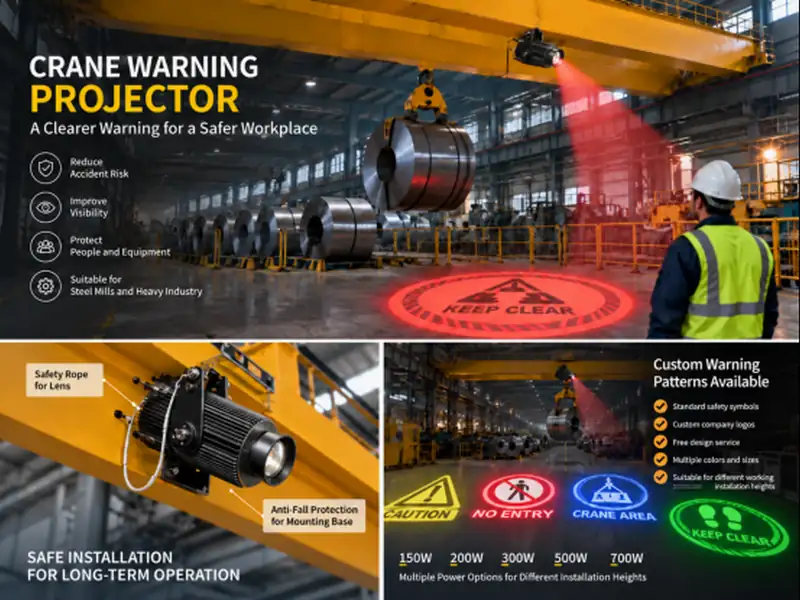
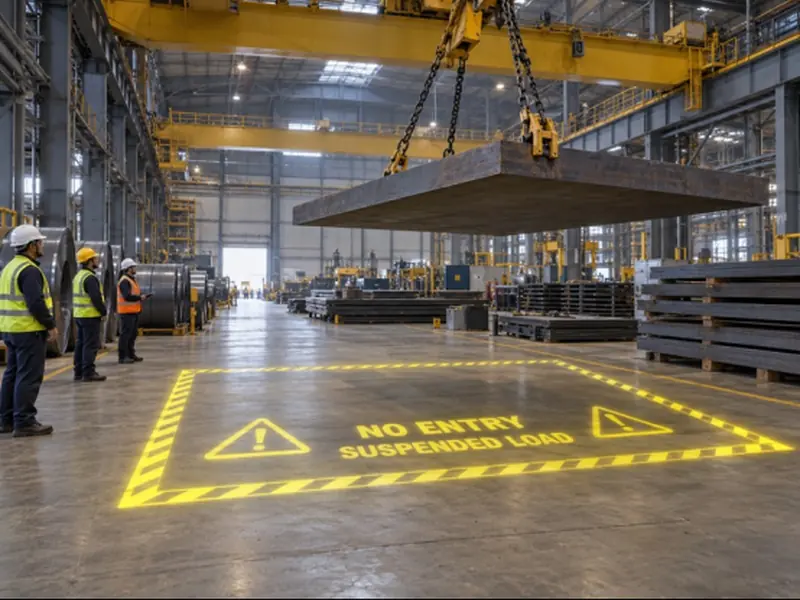
The warning can use a triangle, arrow, boundary line, restricted-zone symbol, or a short message such as “DANGER” or “KEEP CLEAR.” Because the image follows the crane, workers can understand where the danger is coming from and which area they should avoid.A crane floor warning light should work together with alarms, flashing lights, barriers, painted walkways, operating rules, and staff training.
Steel coils create a special handling risk because they are extremely heavy and have a round shape. Their movement must be carefully controlled during lifting, turning, loading, and transport. Workers must remain outside the crane’s operating area while a coil is suspended.
Fixed floor signs cannot show the changing position of a moving crane. A crane warning projector, however, keeps the warning close to the crane or suspended load. The warning image can move across the floor before the load reaches a worker’s position.
For example, the projector can display a bright red warning symbol several meters in front of the crane’s travel direction. Workers may see the image earlier and have more time to leave the operating zone.
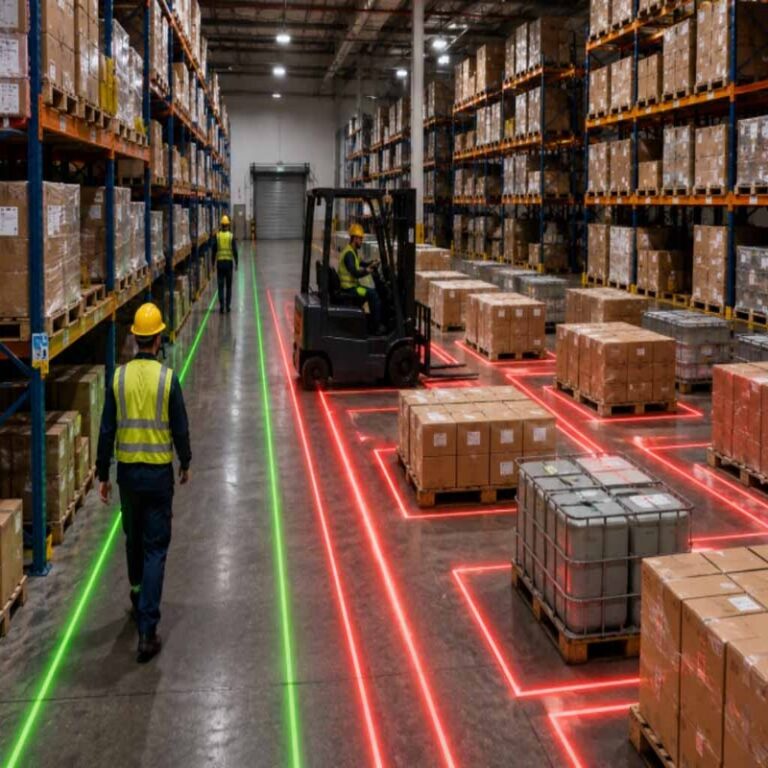
A crane safety light should use a color that contrasts clearly with the factory floor. Red, yellow, green, or white may be selected according to the floor color, ambient light, site rules, and the meaning assigned to each color.
Not every steel plant needs the same power. Installation height, projection distance, floor color, dust, surrounding light, and desired image size can all affect visibility. Available power options include 150W, 200W, 300W, 500W, and 700W.
A 150W or 200W unit may be suitable for a lower mounting position or a darker indoor area. A high-ceiling steel plant with strong production lighting may require a 300W, 500W, or 700W model.
The highest power is not always the best choice. Before selecting a crane warning projector, the buyer should provide the installation height, projection distance, desired image size, operating hours, floor photographs, and photos showing the normal lighting conditions.
These details allow the supplier to recommend a suitable power and lens. A projection test or size calculation can also help confirm whether the warning will remain clear at the required distance.
Every factory has different traffic routes, safety rules, and floor conditions. A standard symbol may work in one area, while another area may need a specific message or boundary design.
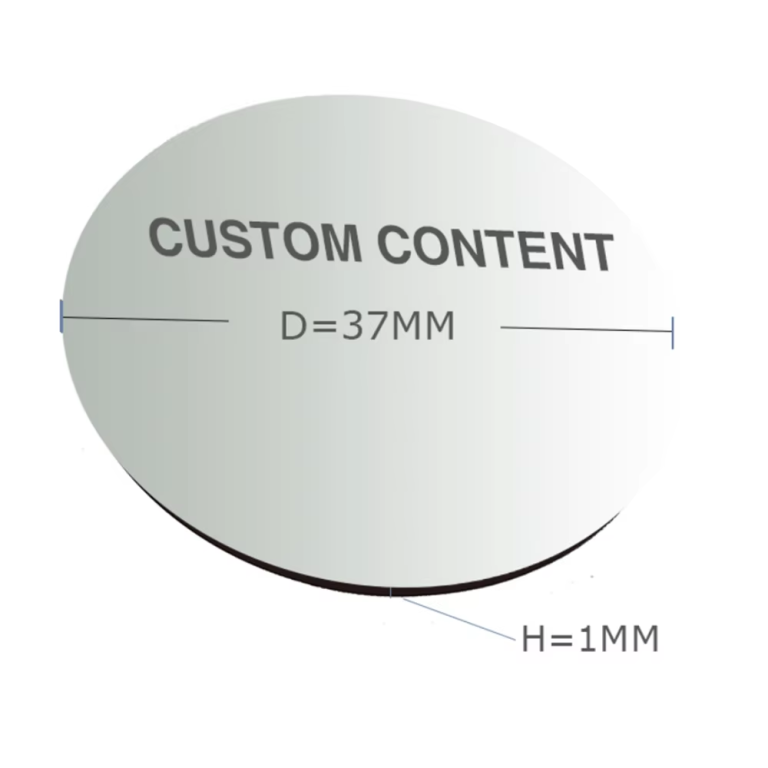
A custom LED crane warning light can display a factory-approved symbol, safety message, arrow, warning border, or restricted-zone image. The warning artwork can be customized according to the customer’s application, and design assistance can be provided free of charge.
Simple artwork normally gives the best result. Large letters, thick lines, and clear shapes are easier to recognize from a distance than small text or detailed graphics. The selected lens should also create the correct image size from the available mounting height.
Clear projection is only one part of the system. Equipment installed on a moving crane may experience vibration, repeated starts and stops, and long operating hours. Secure mounting is therefore essential.
Each crane warning projector should use a strong mounting bracket and secondary fall protection. The lens assembly can include an anti-drop cable, while the mounting base can have an additional safety restraint.
In September, a UK customer ordered a batch of industrial safety projectors for bridge-crane installations. All the units were prepared for use in crane movement and material-handling areas, including steel production and heavy-load transport applications.
Before shipment, each projector was checked for operating condition and projection clarity. The customized warning patterns were tested to confirm their shape, direction, and focus. Every unit was also equipped with a lens anti-drop cable and secondary protection for the mounting base.
The order showed that industrial customers are concerned not only about brightness. Secure installation, clear warning images, suitable power, and careful inspection before delivery are also important parts of the complete system.
A crane warning projector places the warning where workers are more likely to notice it—on the floor in front of them. Because the image moves with the crane, it helps connect the warning with the crane’s actual position and travel direction.
For steel plants and steel coil handling areas, the correct crane warning projector should provide suitable power, a matched lens, customized artwork, secure mounting, and reliable fall protection.
Safety begins with every detail. A warning projector cannot replace training, alarms, barriers, or safe operating procedures. However, it can make an overhead hazard easier to recognize and give workers more time to respond before the moving crane reaches their area.