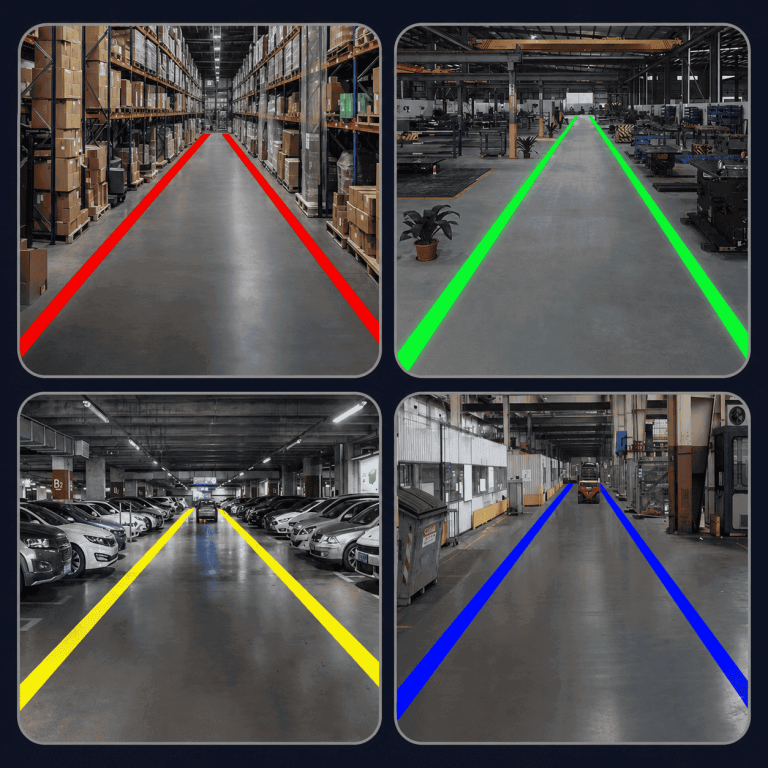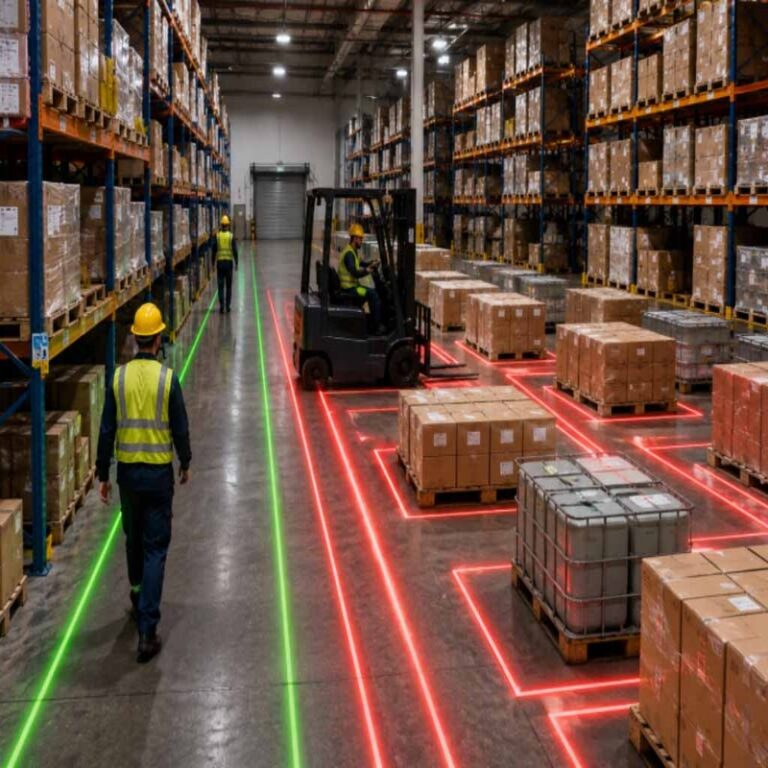

Factory routes do not stay visually simple for long. A pedestrian aisle may run beside a forklift lane, a work zone may shift, and stored materials can change what an operator sees from one hour to the next. Paint and tape still define many of these spaces, but a Red laser line projector gives the site another way to put a clear boundary at the point where people and vehicles make decisions.
The practical problem is not that a painted line disappears overnight. It usually loses influence gradually. Dust softens the color, tires polish part of the surface, and repairs create patches with different levels of contrast. A fixed line can also become less useful after equipment or traffic routes move. Teams may then have a rule on paper and a mark on the floor, yet the route takes longer to read during a busy shift.
A Red laser line projector projects the warning rather than asking the floor finish to carry it alone. That can help on pedestrian walkways, forklift passages, and temporary work-zone divisions. Projection is still only one layer of control. It should support traffic planning, training, supervision, signs, and physical barriers where those controls are required. A bright line does not give a vehicle permission to ignore the site’s operating rules.
Optical geometry comes before brightness. A red laser line projector for industrial use must create the required line from the mounting distance that the building can provide. The source material lists two projection ratios, 1:3 and 1:4. At five metres, the 1:3 option produces a 15 metre line, while the 1:4 option produces 20 metres. Those relationships let a planner compare the available mounting point with the length needed on the floor.

Line width matters as well. The recorded Red laser line projector configuration allows adjustment from 1 to 20 cm, which is a broad enough range to require a deliberate site choice. A narrow line may suit a precise boundary, while a wider line may be easier to pick out from a moving position. The floor color, competing light, viewing angle, and purpose of the boundary should decide the setting. Red was requested here, with green and blue recorded as alternatives.
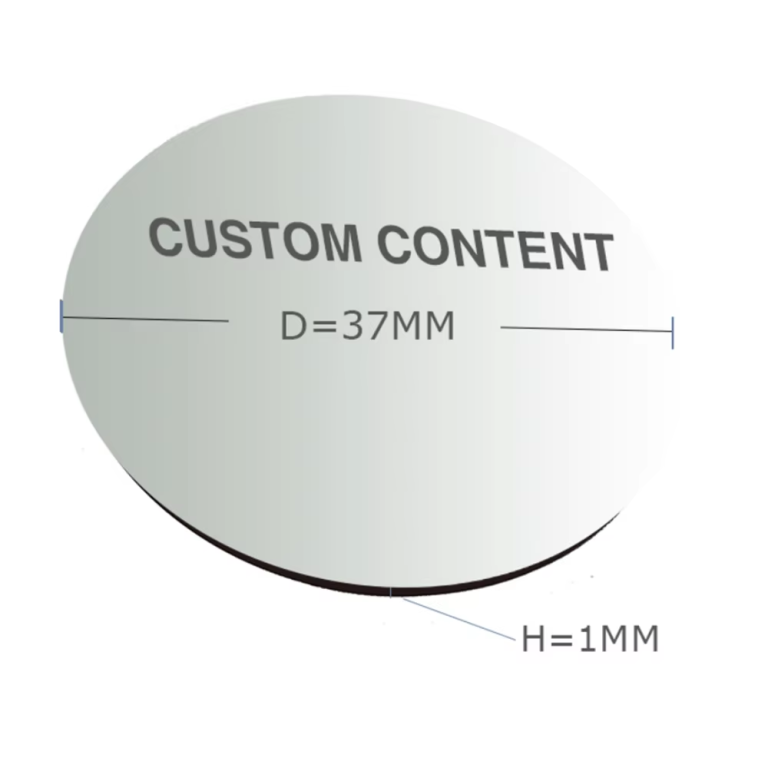
The South Korean inquiry dated May 17, 2026 provides a compact example. The customer asked for a 10 metre red line, wanted to understand line length at different projection distances, and asked whether outdoor use was possible. Noparde proposed the Red laser line projector with 1:3 and 1:4 ratio choices, adjustable width, and an optional waterproof configuration. The source also records operation from minus 20 degrees C to 60 degrees C and a wear-resistant, impact-resistant housing for demanding workshop conditions. It does not provide a service-life value, so no lifespan claim is added. The project notes identify factory walkways, forklift routes, and work-zone divisions as intended applications.

Outdoor suitability needs more than a general waterproof label. The Red laser line projector has to be configured for exposure, installed so water cannot collect around connections, and checked against the site’s real temperature and mounting conditions. The recorded range answers one part of that review, but it does not replace an installation plan. The same caution applies indoors when dust, vibration, or cleaning routines may affect the mounting point or the projected surface.
A red laser line projector for factory should be tested from the intended viewing positions before the layout is accepted. The line may look clear directly below the lamp but less distinct from a forklift seat or at the entrance to an aisle. A short site trial can confirm length, width, color contrast, and any interruption caused by pallets or equipment. It also gives the team a reference for later cleaning and alignment checks.
Calling a unit a heavy duty red laser line projector is useful only when the installation supports that claim. Housing strength matters, but so do a secure mount, protected wiring, accessible maintenance, and a projection path that is not regularly blocked. Teams should record the selected ratio, mounting distance, line width, and color. That record makes it easier to restore the intended boundary if the equipment is moved during maintenance or a layout change.
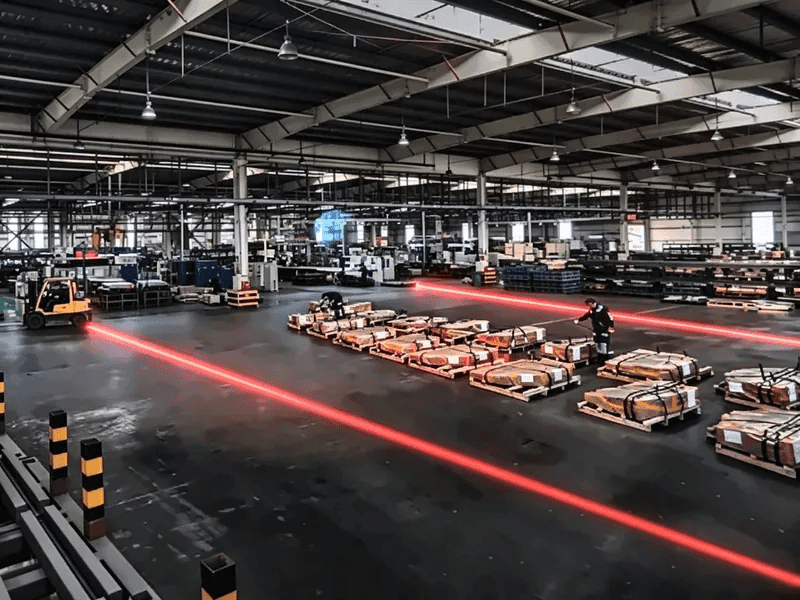
Procurement also needs to separate the fixed product choice from the site variables that may change. The same Red laser line projector can produce a different visual result when the mount moves, the floor is resurfaced, or stronger lighting is installed nearby. A handover record should include photographs taken from the normal approach direction, the measured line size, and the approved operating position. Periodic checks can then compare the live projection with that reference. If the line becomes less clear, the team can inspect alignment, lens cleanliness, obstructions, and ambient light before assuming that more power is the only answer.
Noparde’s role in a Red laser line projector project is to connect the requested floor result with the optical and environmental choices that produce it. A useful inquiry includes a site photo, the required line length and width, available mounting distance, surface color, ambient-light conditions, and any outdoor exposure. With those details, the discussion can stay focused on a line that fits the route instead of defaulting to the brightest available unit.