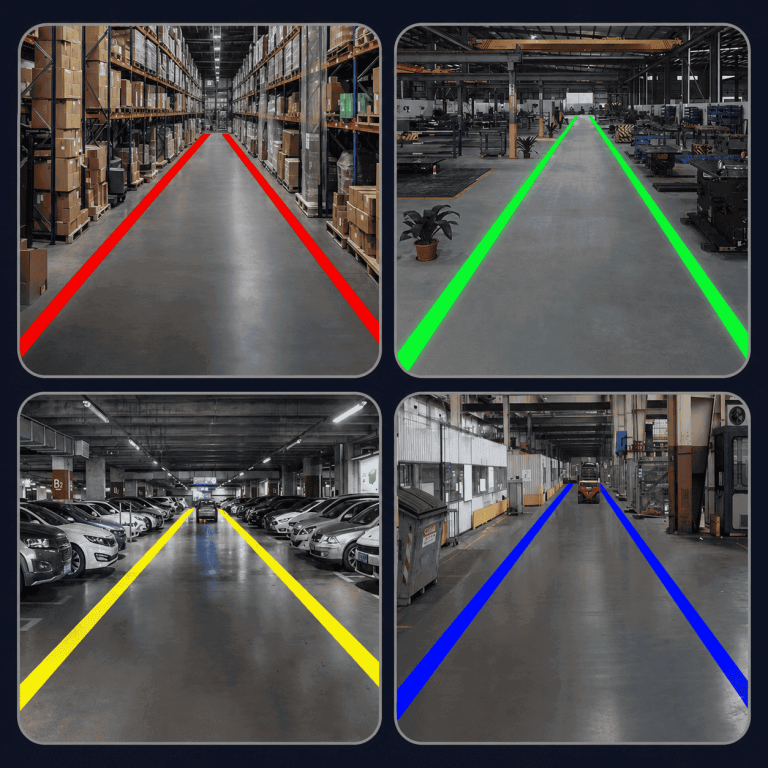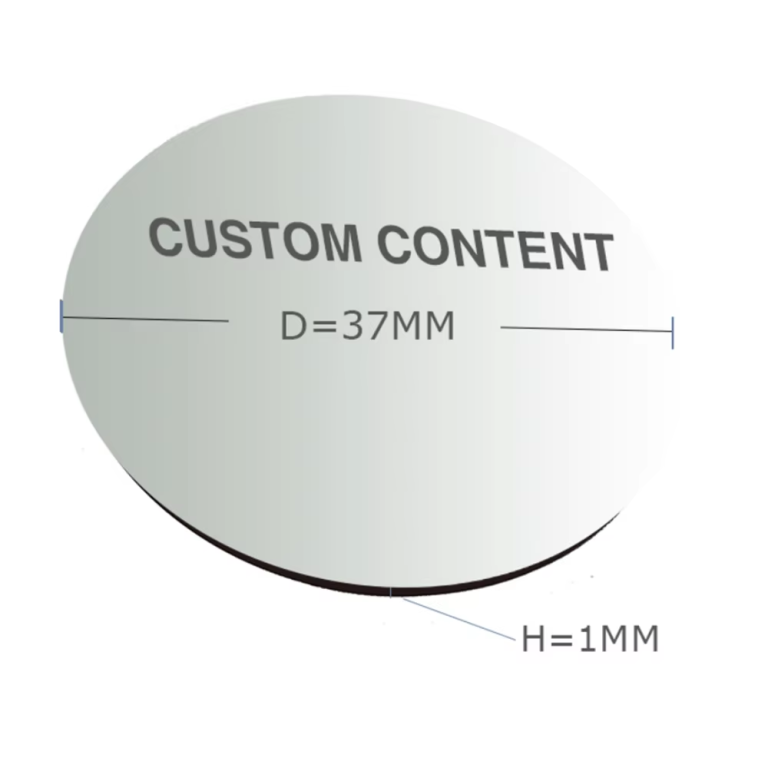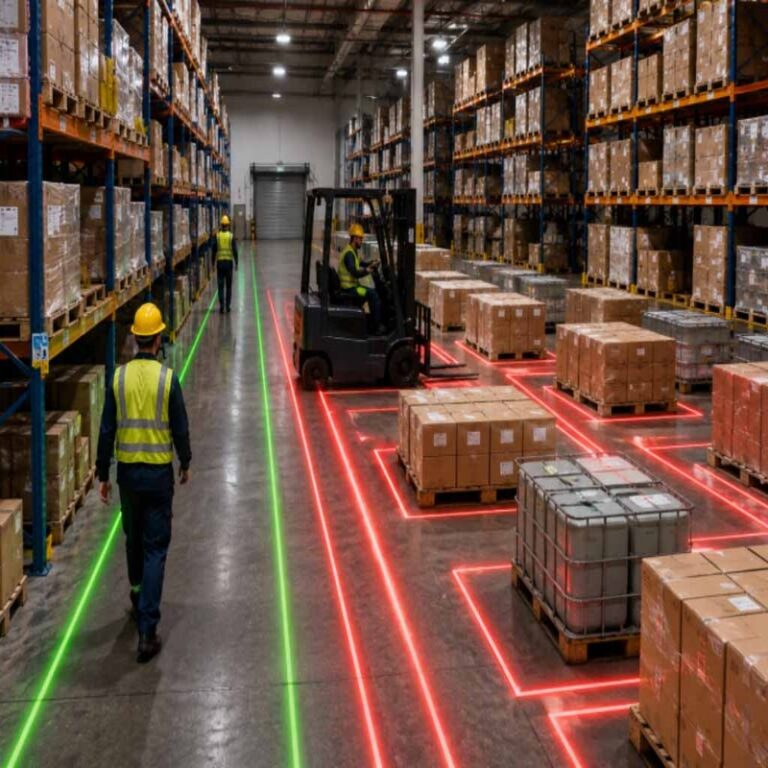

A Customer Asked: “How Can We Make Forklift Danger Zones More Visible?”In March 2026, a large distribution center in Southeast Asia contacted us with a simple but important question:“Our warehouse already has warning signs and floor markings, but forklift areas are still difficult to notice. Is there a better way to make danger zones clearly visible?”
The warehouse was busy from early morning to late evening. Forklifts moved between storage racks, loading areas, and pedestrian walkways. Workers often had to cross the same areas used by vehicles.The customer had already tried painted floor lines and printed safety signs. They worked when the floor was clean and the signs were easy to see. But in a busy warehouse, visibility could quickly become a problem.This is where warehouse safety projection became a practical option.
The main problem was not a lack of safety signs. The problem was where people looked.Wall signs were easy to miss when workers were focused on moving goods. Painted lines could become dirty or worn after long-term use. Tape could peel off because of forklift traffic, cleaning, or heavy use.The customer also wanted to avoid adding too many physical signs to the warehouse.A crowded warehouse already has storage labels, direction signs, fire safety signs, equipment markings, and company information. Adding more boards does not always make the environment safer.The customer needed a warning method that could be seen directly on the floor and could remain clear during daily operations.
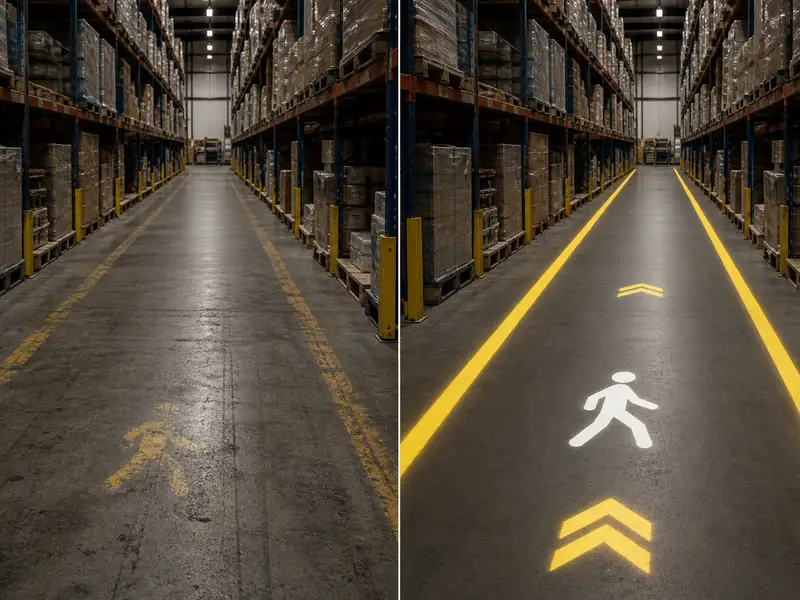
Before selecting the equipment, the customer gave us several clear requirements.First, the projected warning area had to be bright enough for workers to see from a normal working distance.Second, the projection needed to remain clear on a warehouse floor that could become dusty or slightly dirty.Third, the system had to work around moving forklifts without creating obstacles on the floor.Finally, the customer wanted the option to display different warning patterns, including lines, symbols, arrows, and customized signs.There was also an installation challenge.Some projectors could not simply be placed at any angle and expected to produce a clean image. The mounting height, projection distance, lens, image size, and installation angle all affected the final result.
Our Solution: Project Safety Information Where People Need It
For this project, we recommended a projection-based safety system instead of adding more physical signs.The selected equipment worked as a warehouse safety warning projector, displaying bright warning lines and safety symbols directly onto the floor.A suitable warehouse safety projection light can create a visible safety area without putting additional objects into the working space. This is useful around forklift routes, loading zones, pedestrian crossings, and restricted areas.For locations that require a more specific message, a laser sign projector can also be considered for projecting clear symbols, text, or custom patterns.In this project, the projection pattern was adjusted according to the customer’s actual floor area and installation position. Instead of using a standard image without checking the site, we considered the projection distance and required coverage before finalizing the setup.The goal was simple: make the warning visible at the point where the safety decision happens.
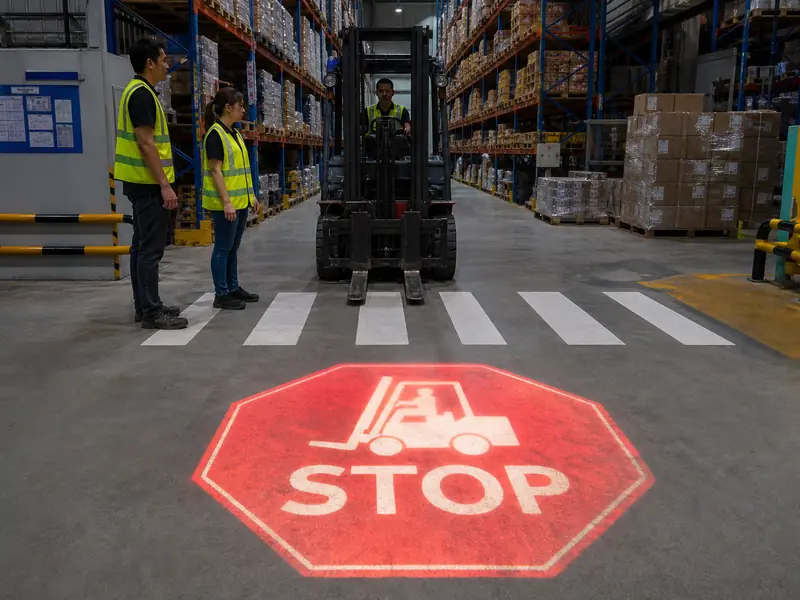
So, why did the customer choose projection instead of relying only on traditional markings?
| Traditional Method | Projection-Based Method |
| Painted lines can wear over time | Projected lines can be changed without repainting |
| Signs occupy wall or floor space | No physical sign is placed in the traffic area |
| Fixed information | Patterns can be customized |
| Can become less visible when dirty | Light-based warnings remain easy to identify |
| Changes require new materials | New projection patterns can be prepared |
This does not mean traditional safety signs are no longer useful. In many warehouses, signs, floor markings, and projected warnings work better together.Projection is especially useful when the customer needs a flexible visual warning in an active working area.
One important lesson from this project was that a safety projector should not be selected only by power.A 100W, 200W, or 300W projector may perform differently depending on the projection distance, lens, mounting height, ambient light, and required image size.For example, a small warning area close to the floor may need a different lens from a large projection area several meters away.For this reason, our team checked the customer’s installation conditions before confirming the final configuration. The projection image, lens selection, brightness, mounting position, and pattern size were considered together.The customer could also select different warning designs based on the application, such as pedestrian lines, forklift danger zones, arrows, or custom safety symbols.Noparde focuses on this type of application-based projection rather than simply supplying a standard projector.
This project was not designed to replace every safety measure in the warehouse.Its purpose was to add another visible layer between vehicles, workers, and restricted areas.Think about a forklift approaching a pedestrian crossing. A painted line may show where the crossing begins, while a projected warning can make that boundary much more noticeable during operation.This makes warehouse safety projection particularly useful in areas where traffic changes frequently or where fixed markings are difficult to maintain.It can also support warehouses that regularly change their layout. When the working area changes, projected information can be updated without repainting the entire floor.
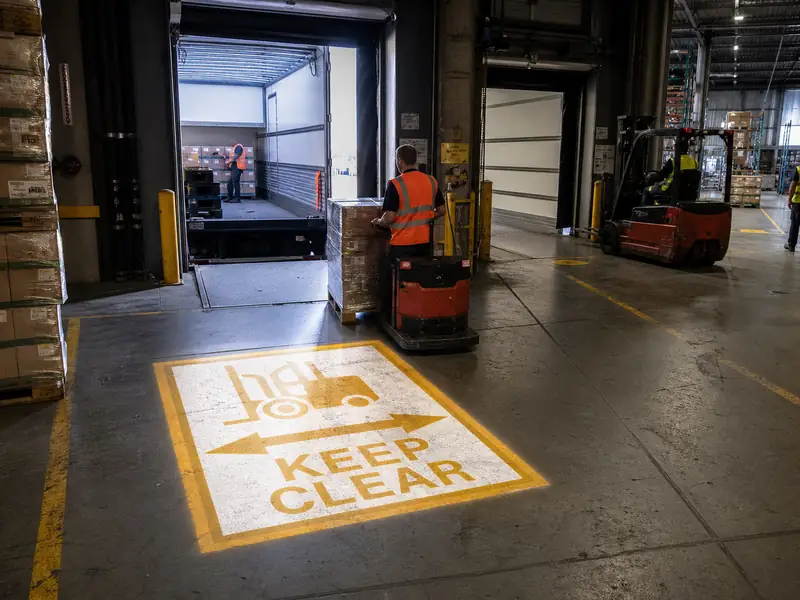
The final project showed that improving warehouse safety does not always require a large construction project.Sometimes, the problem is simply that an important warning is not visible at the right moment.By projecting safety lines, symbols, and warning areas directly into the working environment, warehouses can add a flexible visual layer to existing safety systems.The same approach can be used in distribution centers, factories, logistics facilities, loading areas, and other industrial workplaces where people and vehicles share the same space.For facilities looking for a warehouse safety floor projector, the key is not choosing the most powerful model. The better approach is to start with the actual site: projection distance, image size, ambient light, mounting position, and the type of warning required.A well-designed warehouse safety projection solution should fit the working environment rather than force the environment to fit the equipment.That is what turns a simple projection device into a practical industrial safety solution.