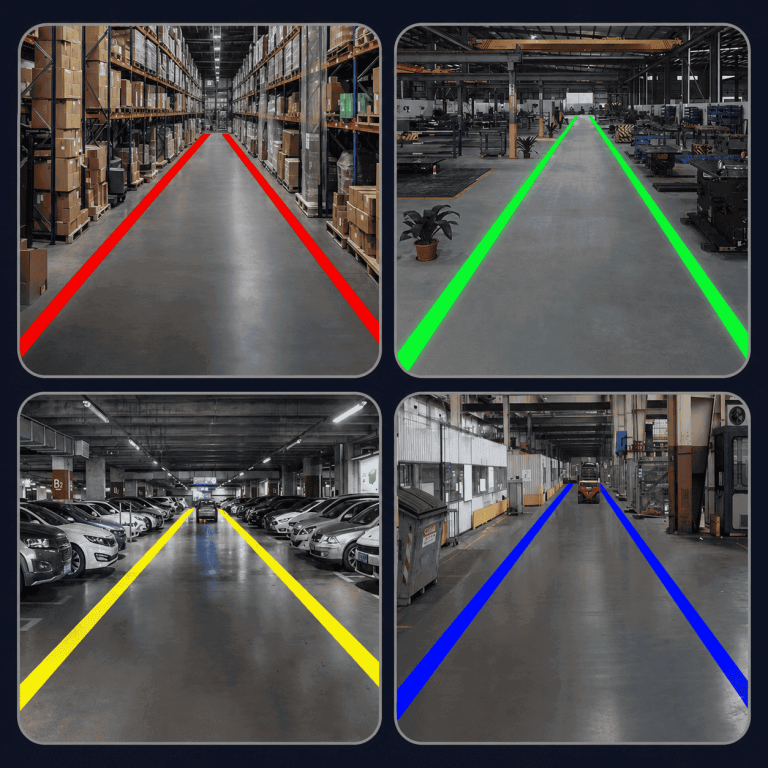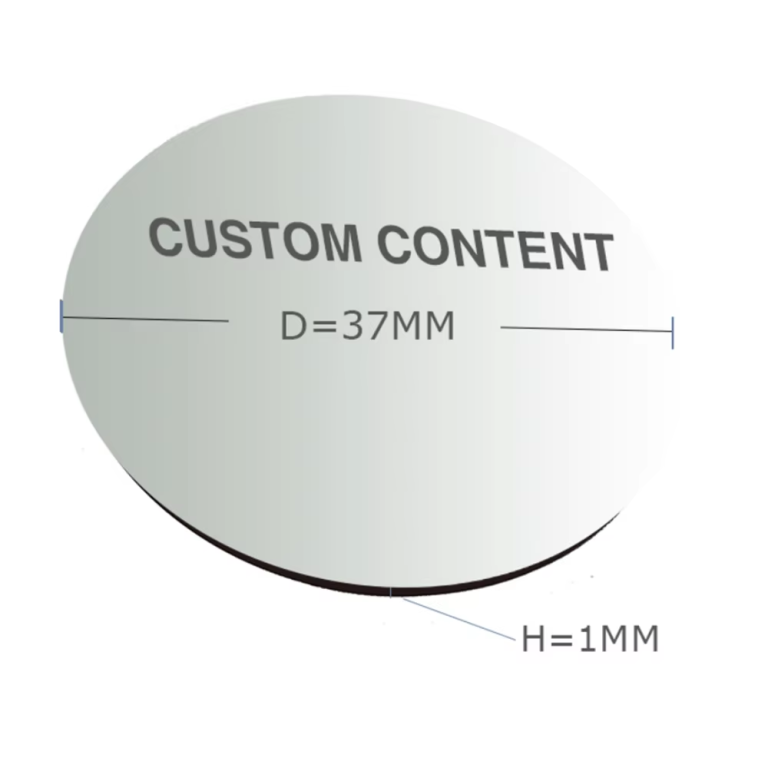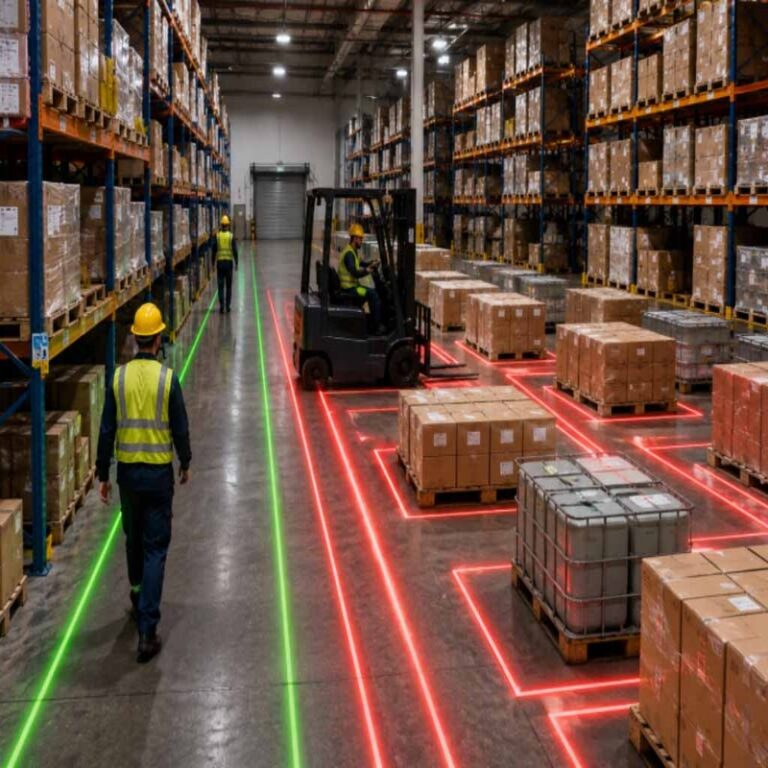

A bridge crane can move a heavy load across a large work area in seconds. Workers may hear an alarm, but can they tell exactly where the danger zone is? In a noisy metal fabrication shop, a rotating warning light can attract attention before the crane begins to travel. When it works with a projected floor warning, it can also show workers where they should not stand.This article explains how to use this combined warning system around overhead cranes. It focuses on practical selection, placement, testing, and maintenance rather than complex lighting theory.
Why Overhead Crane Areas Need Clear Visual Warnings,A suspended load may swing, shift, or move beyond the area workers expect. The risk is not limited to the space directly below the hook. People can also be struck by the load or lifting equipment.NIOSH reported that from 2011 to 2017, just over 50% of crane-related deaths across all industries involved a worker being struck by an object or equipment. This figure covers different crane applications, but it shows why lift-zone control deserves attention. A warning device alone cannot make lifting safe, yet it can support a wider safety plan. OSHA requires an effective warning signal for most overhead cranes with powered travel. It also states that operators should avoid carrying loads over people and sound a warning when a hook or load approaches personnel. A rotating warning light helps communicate that the crane is active. However, a beacon mounted high above the floor does not always show the exact boundary of the moving risk.
What Is Missing from a Standard Warning Beacon?A traditional rotating warning beacon tells workers that something requires attention. It does not normally answer three immediate questions:Where is the hazard?How large is the danger area?Is the warning connected to this crane or another machine?
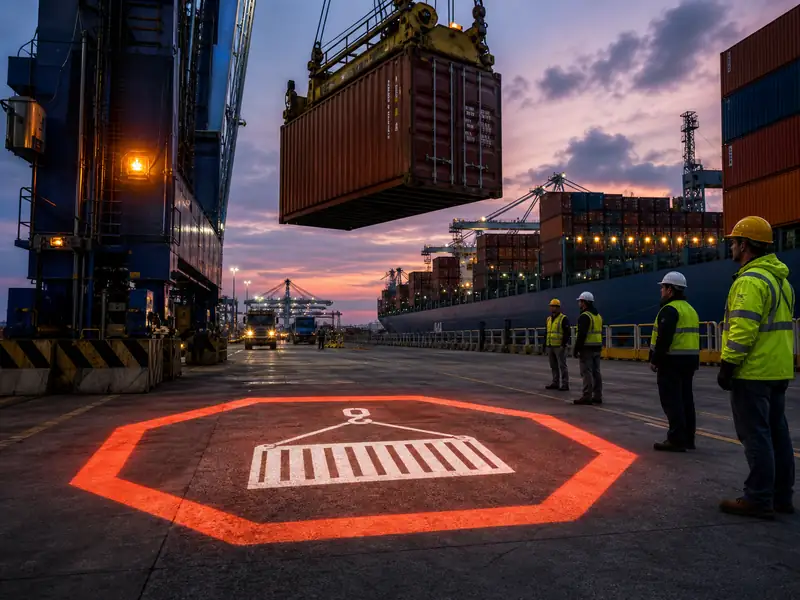
This can be a problem in a large workshop with several cranes, machines, and warning lamps. Workers may see flashing lights so often that they stop reacting quickly.Adding an industrial warning projector can make the message more specific. The projector can display a red circle, warning triangle, “KEEP CLEAR,” or “DANGER—SUSPENDED LOAD” on the floor. If it moves with the crane trolley, the visible warning area can follow the lifting operation.The rotating warning light attracts attention, while the floor projection provides location and meaning.
A Practical Warning System for a Crane Bay:
A useful crane warning setup may contain three parts. First, install a rotating warning light where workers can see it from the main approach routes. Second, mount a projector on the crane or trolley so the image points toward the controlled area. Third, connect both devices to a suitable crane control signal so they operate only during the required movement or lifting stage.
A visual warning projector should create a sharp image on the actual factory floor. Before choosing a model, record:Installation height,Projection distance and angle,Ambient light level,Floor color and surface condition,Available voltage,Crane vibration and movement,Dust, heat, moisture, or oil in the area.
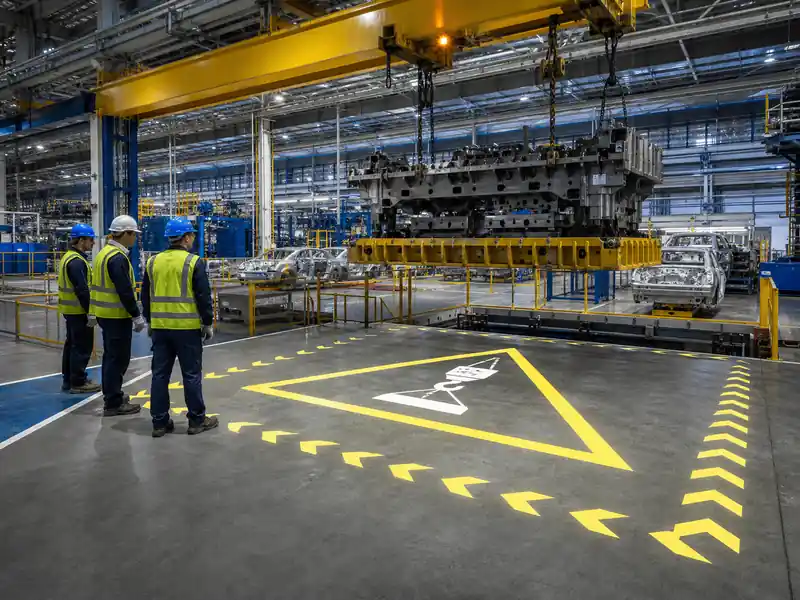
Can a Customized Image Improve the Warning?
A custom safety gobo projector allows the site to use a symbol that matches its real hazard and internal safety rules. For example, a foundry may need a large red exclusion circle, while a steel service center may prefer a suspended-load icon with “DO NOT ENTER.”The design should not contain too many words. Workers need to understand it while walking, not stop and read a paragraph. Test the image at full size before approving the final gobo.Noparde can supply customized projection patterns for different crane heights and floor layouts.
In a 2025 pilot scenario at a metal fabrication workshop, an overhead crane moved steel parts between two work cells. The existing rotating warning light showed that the crane was active, but workers could not easily judge the moving exclusion area. The safety team added a red projected circle with a suspended-load symbol and connected it to the crane travel signal. During the four-week observation period, supervisors recorded fewer unplanned entries into the marked lift zone and fewer verbal reminders from the crane operator.
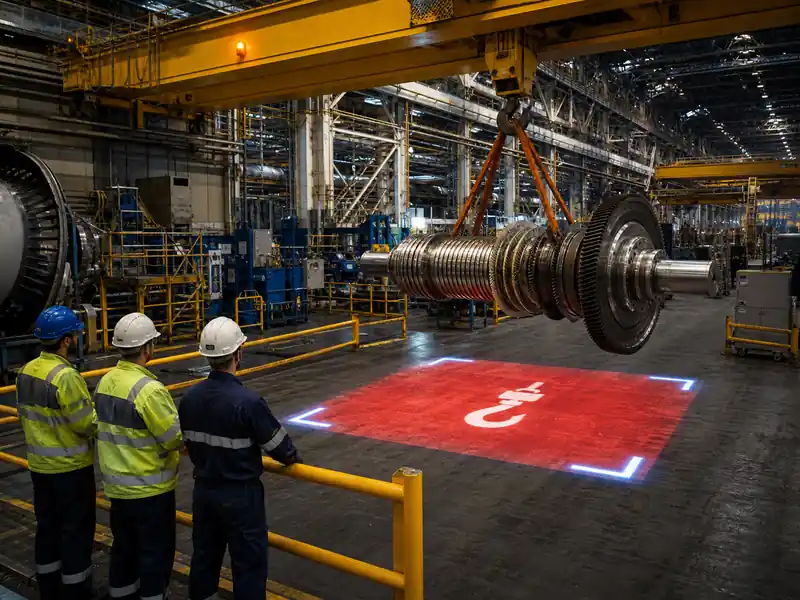
The projector bracket must remain stable during crane acceleration, braking, and vibration. If the bracket moves, the image can shift away from the intended danger zone. Use locking fasteners and inspect the mounting point regularly.The rotating warning light must also remain visible from key approach directions. Do not place it behind beams, cable trays, or crane structures. OSHA guidance says workplace alarms must be noticeable above the surrounding light or noise conditions. Visual warnings are especially useful in noisy areas where hearing protection may reduce the value of an audible signal.
A Simple Inspection Routine,Check the rotating warning light and projected pattern at the start of each shift or according to the site’s inspection plan. Confirm that:
The light activates at the correct crane stage.
The projected image is sharp and correctly positioned.
The bracket and fasteners are secure.
Dust or oil has not covered the lens.
Cables have no visible damage.
Workers understand the symbol.
Record faults and correct them before relying on the system. If the floor layout, lifting route, or crane height changes, review the projected warning area again.
The best crane warning system does more than flash. It helps workers understand both the presence and location of a moving hazard. A rotating warning light provides a strong general alert, while a floor projector adds a clear boundary or instruction.Used together, they can make lift zones easier to recognize in busy, noisy workshops. Noparde provides customized visual warning systems for crane operating areas. You can receive free consultation and personalized layout design support to mark hazardous zones, thereby protecting ground personnel from various crane-related risks.