
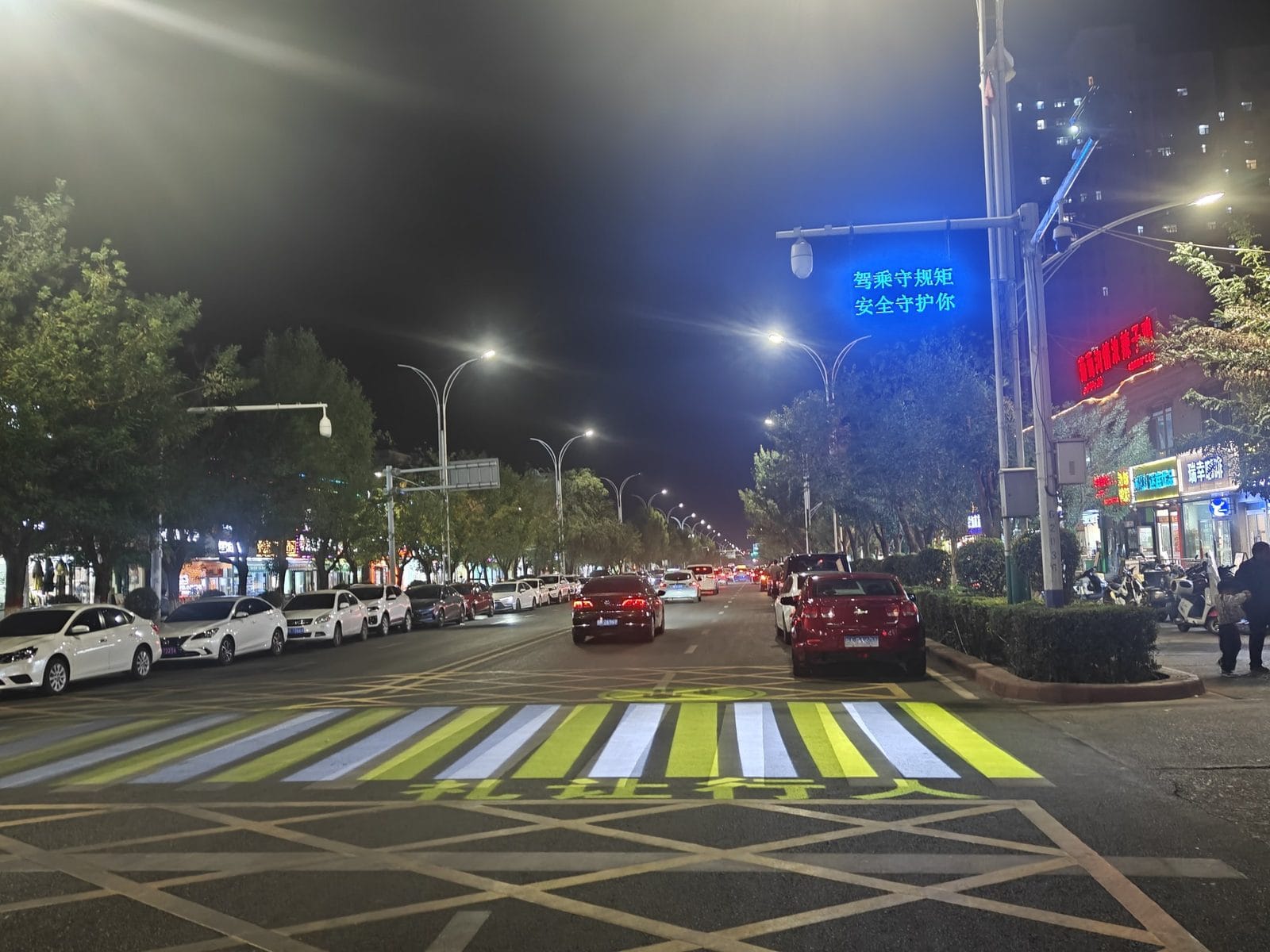
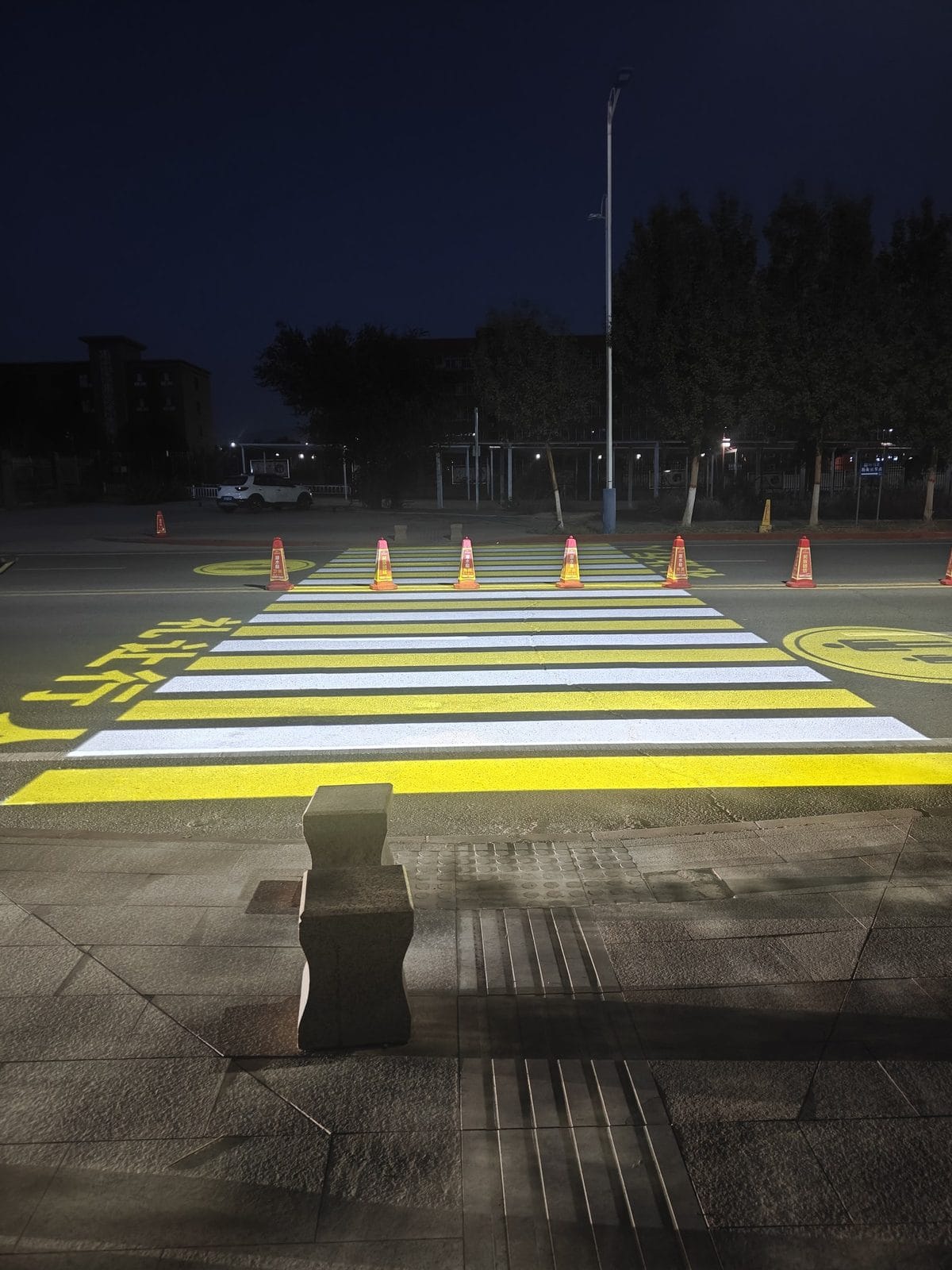
In October 2026, a crosswalk projector was running at a road crossing in Turpan, Xinjiang. After dark it cast yellow and white zebra bars and a line of yield text onto the asphalt, right where approaching drivers look as they near the crossing. This case shows how the projection looked on site and lists what should be checked before a similar setup goes onto another road.
The scene: a crossing competing with a bright street
The junction sits on a busy commercial street. From the driver’s seat the view is crowded with light: shop fronts, LED message boards on the signal poles, streetlamps, and the headlights and tail lights of parked and moving cars. Ordinary painted markings fade into that background, and a person waiting at the curb becomes one small detail among many.
This is the gap a crosswalk projector is meant to close. Rather than adding one more sign at eye level, it puts the warning on the road surface itself, inside the area a driver is already watching while rolling toward the stop line.
The projection: stripes and yield text in the driver’s view
The fixture is mounted on a pole arm above the roadway and aimed down at the crossing. In the field photos the projected pattern has three parts:
- Alternating yellow and white zebra bars laid across the lane, lined up with the crossing.
- A line of Chinese yield text (礼让行人, “yield to pedestrians”) on the approach side of the bars.
- A round pedestrian symbol next to the bars, visible in the photo below.
Because the marking is made of light rather than paint, it stays vivid after dark and falls on whatever occupies the lane, vehicles included.
On-site photos
Where an outdoor crosswalk projector fits, and what to confirm on site
A zebra crossing projector set up this way suits places where people cross a vehicle route, painted markings are hard to read at night, and a pole, arm or wall above or beside the crossing can carry the fixture. It is a useful option when another eye-level sign would only add to the visual clutter.
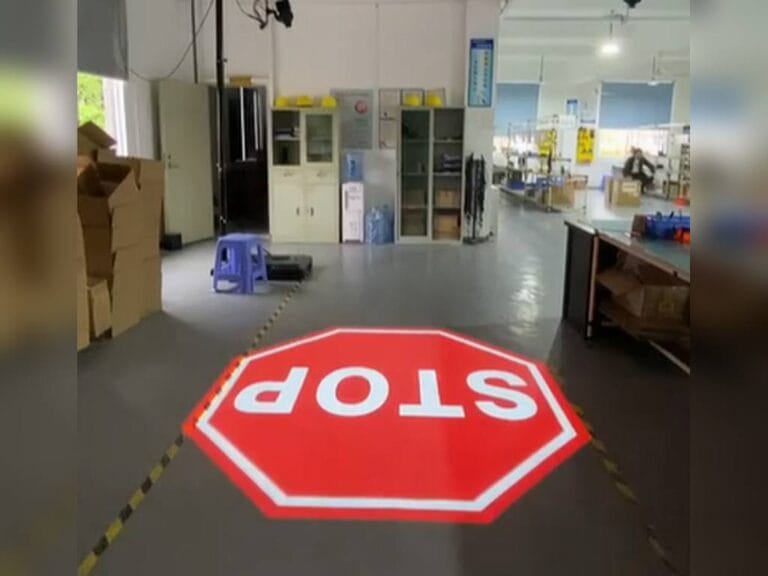
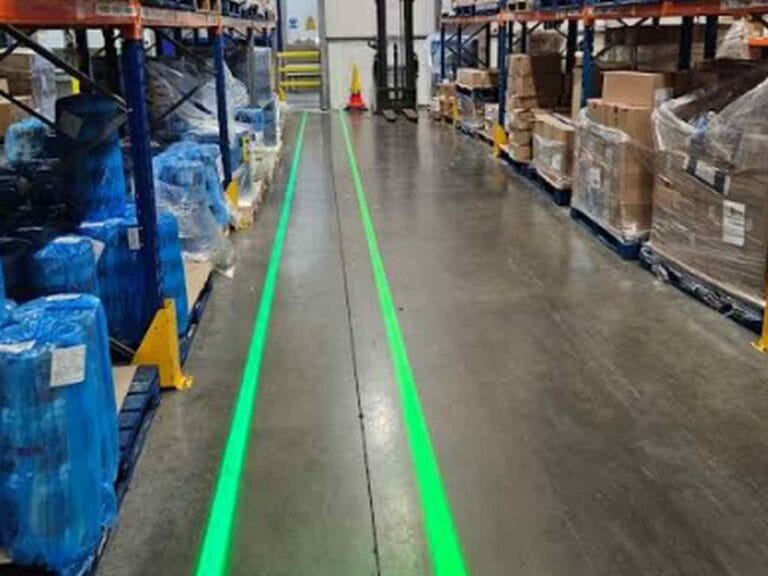
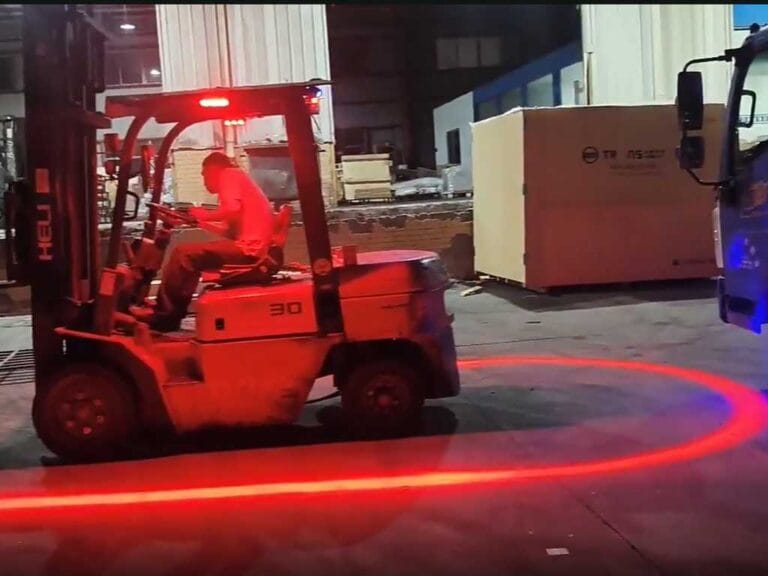
The same idea carries over to industrial sites: roads inside a factory park, gates, and loading areas where people walk across vehicle lanes. For an indoor example, see how a pedestrian crossing projector is used around forklift traffic in warehouses.
Before choosing equipment, confirm these points on site:
- Mounting position and height: where the fixture can be fixed, and the tilt needed to cover the crossing without heavy distortion.
- Throw distance and image size: how far the fixture sits from the road and how wide the pattern must be; confirm on site.
- Ambient light: streetlamps, shop signs and headlights all reduce contrast, so the output needed depends on mounting height and ambient light — confirm on site.
- Pattern content: bar layout and colours, the wording and language of the yield text, and any symbols.
- Power and exposure: the power supply at the mounting point and the weather the fixture will face.
- Permissions: whether the road owner and local rules allow projected markings at that location.
To compare options, browse our zebra crossing projectors, or read the zebra crossing projector selection guide.
Planning a night crossing projection?
Send us day and night photos of the crossing, the mounting point you have in mind, rough distances, and the wording you want on the road. We will reply with a suggested setup and a list of items still to verify on site. Contact us to start.