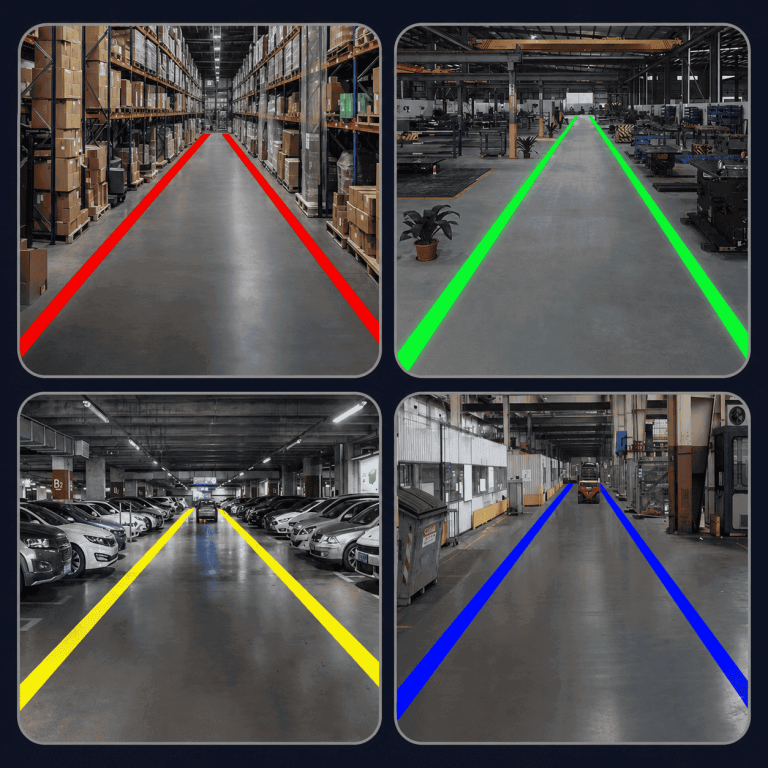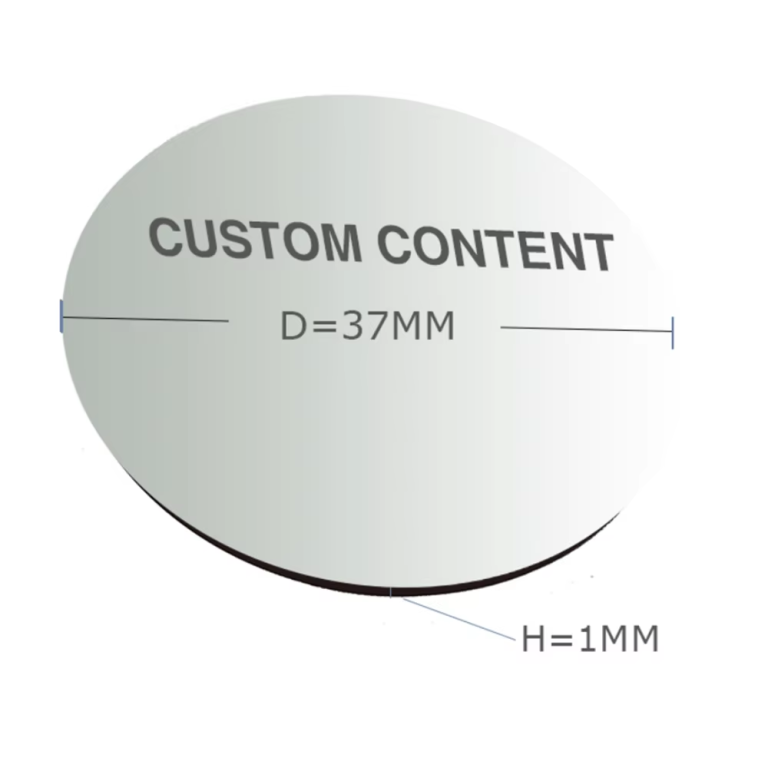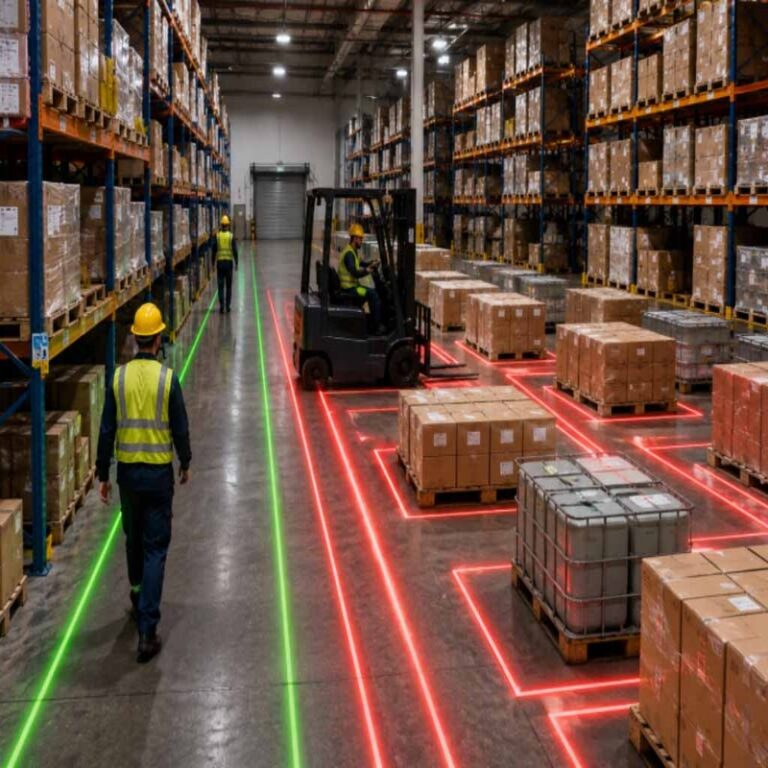

A manufacturing warehouse can become difficult to manage when forklifts, workers, pallets, racks, and delivery vehicles all use the same space. A painted line may show where a route starts, while a sign may explain a rule, but these fixed markings do not always stand out in a busy working area.
This is where a Laser Light Projector can provide an additional visual layer. By projecting a line, logo, symbol, pattern, or custom image onto a selected surface, projection lighting can help workers and operators identify important areas more easily.
Warehouse aisles are more than spaces between storage racks. They are working routes used by forklifts, pallet trucks, employees, and material-handling equipment.
OSHA states that permanent aisles and passageways where mechanical handling equipment is used should be appropriately marked. It also recommends separating forklift traffic from pedestrians where possible and using designated pedestrian walkways.
For a busy facility, visual guidance can therefore be useful as part of a wider workplace safety plan. Projection does not replace floor markings, barriers, training, traffic rules, or other safety controls. Instead, it can add another way to communicate where people and equipment should move.
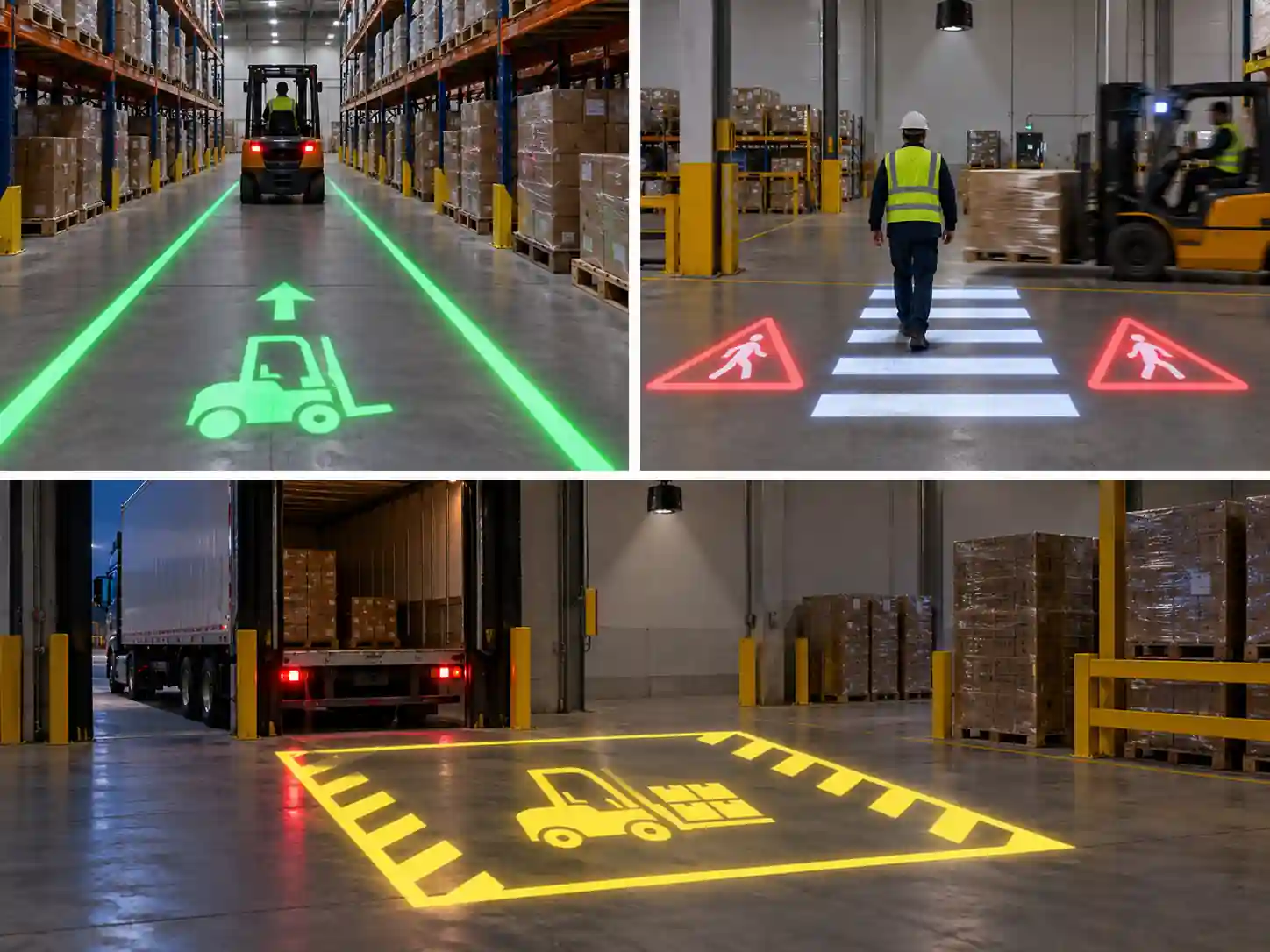
Imagine walking through a large warehouse. Would it be easier to identify a forklift route from a small wall sign, or from a clearly visible projected line or symbol directly on the floor?
A projected visual marker can be placed close to the area where the information matters. For example, a line can indicate a preferred route, while a warning symbol can highlight a pedestrian crossing or a restricted area.
This makes Laser Light Projector technology interesting for facilities where visual information needs to be clear but the layout may change over time.
Although forklift routes are an important application, projection lighting can be used for other workflow needs.
A manufacturing facility may use projected graphics to identify:
- Forklift travel lanes
- Pedestrian crossing points
- Loading and unloading areas
- Production zones
- Material handling routes
- Restricted access areas
- Equipment locations
- Temporary work zones
The main advantage is flexibility. If the warehouse layout changes, the projected image can potentially be changed or repositioned without repainting the entire floor.
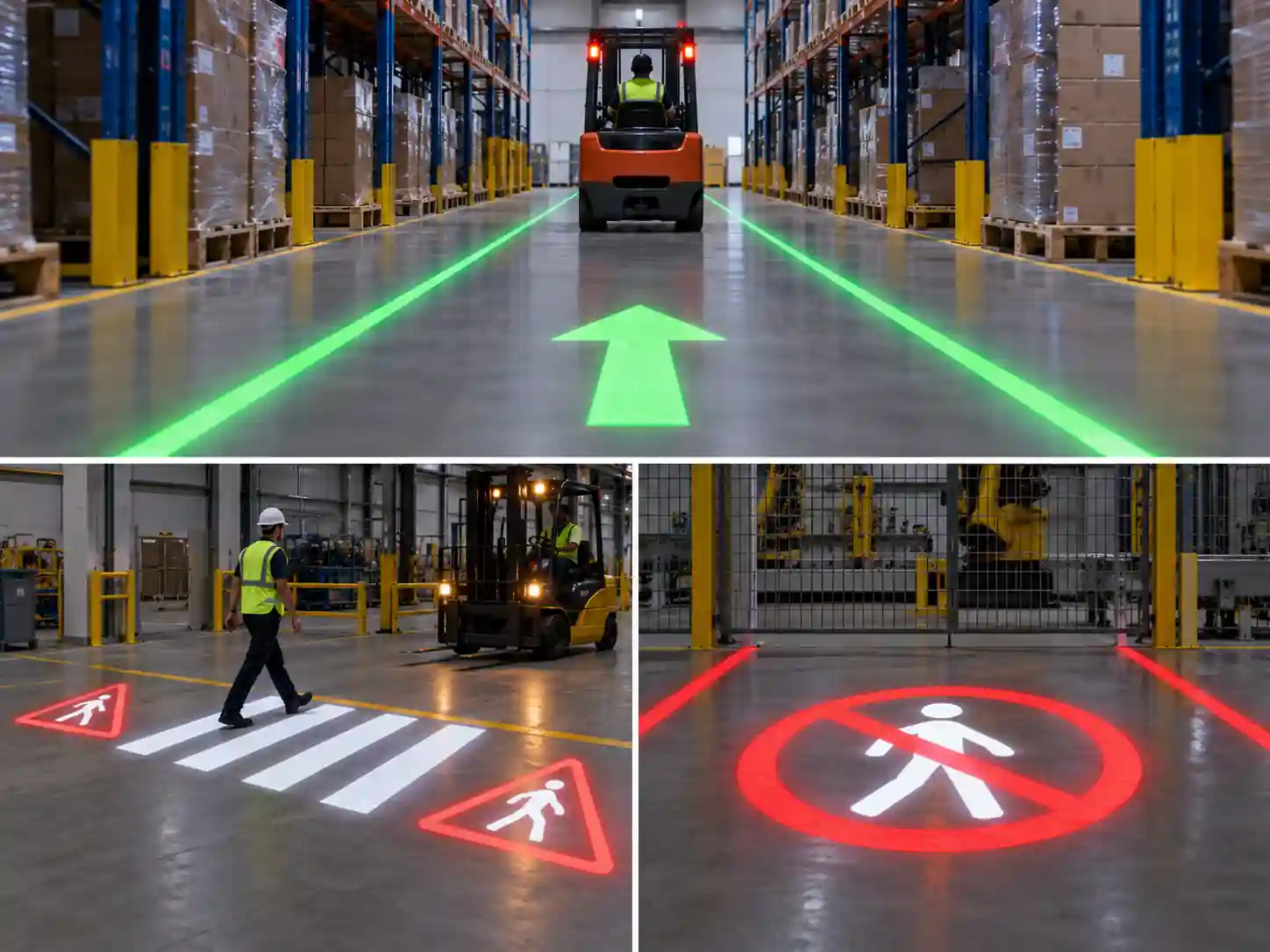
The term laser projection for manufacturing can cover many different applications, but warehouse aisles are particularly practical because they already depend heavily on visual route management.
Long aisles, crossing points, loading areas, and temporary material routes can all benefit from additional visual markers. In facilities with high ambient light, however, the projector needs to be selected according to the actual environment. Projection distance, mounting height, image size, surface color, ambient light, and required visibility should all be considered before choosing a product.
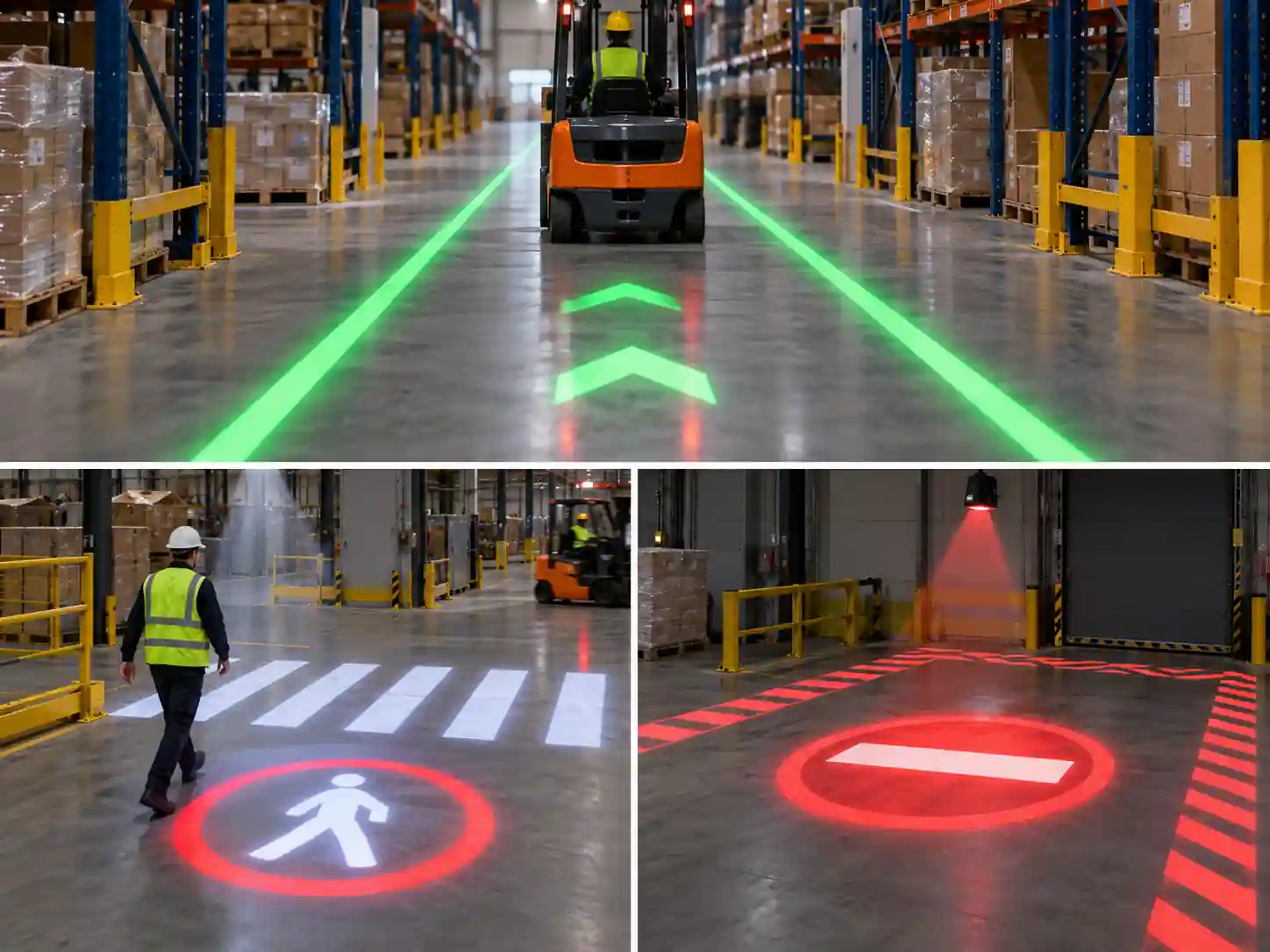
Consider a manufacturing warehouse where forklifts move between storage racks and a loading area while employees regularly cross the main aisle. Existing floor markings identify the route, but during busy periods, additional visual guidance is useful.
The facility installs a projector above the main crossing area and projects a high-visibility warning symbol onto the floor. The projected image is used together with existing markings, signs, pedestrian procedures, and forklift training.
An industrial laser projector should be selected according to the application rather than simply choosing the highest-power model.
Before installation, consider:
Projection distance: How far is the projector from the floor or target surface?
Image size: How large does the projected line, logo, or symbol need to be?
Ambient light: Is the application inside a dark warehouse or a brightly lit production area?
Mounting position: Can the projector be installed above the route with a clear projection path?
Surface: Is the target floor or wall dark, light, smooth, or uneven?
Application purpose: Is the projection being used for route guidance, area identification, branding, or another visual purpose?
If your manufacturing facility has long warehouse aisles, changing material routes, busy pedestrian crossings, or areas where visual identification is important, projection lighting may be worth considering.
The right solution depends on the actual environment. A projector designed for a short indoor route may not be suitable for a long-distance application. Likewise, a solution that works in a low-light warehouse may require different specifications in a bright production area.
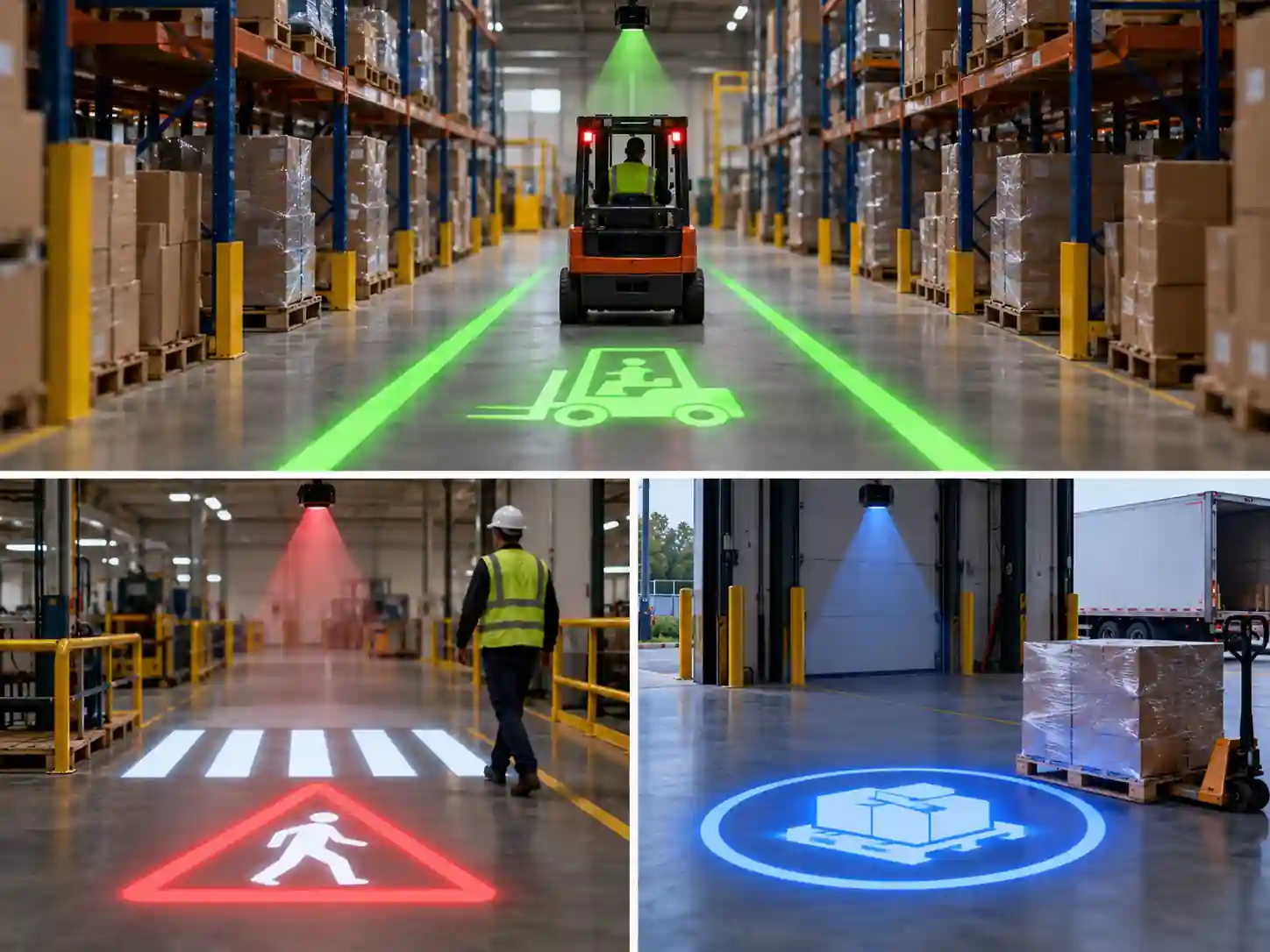
Noparde provides projection lighting solutions for different commercial and industrial applications. Projector selection can be based on factors such as projection distance, mounting height, image size, brightness requirements, and the type of visual message required.
Manufacturing workflows depend on clear movement routes. When forklifts, workers, and materials share the same environment, visual communication becomes an important part of daily operations.
A Laser Light Logo Projector can add a flexible visual marker to selected warehouse areas. Lines, symbols, logos, and custom graphics can help identify routes, zones, and specific locations without relying only on permanent floor markings.
The key is to choose the projector according to the environment and use it as part of a broader workplace management and safety system.