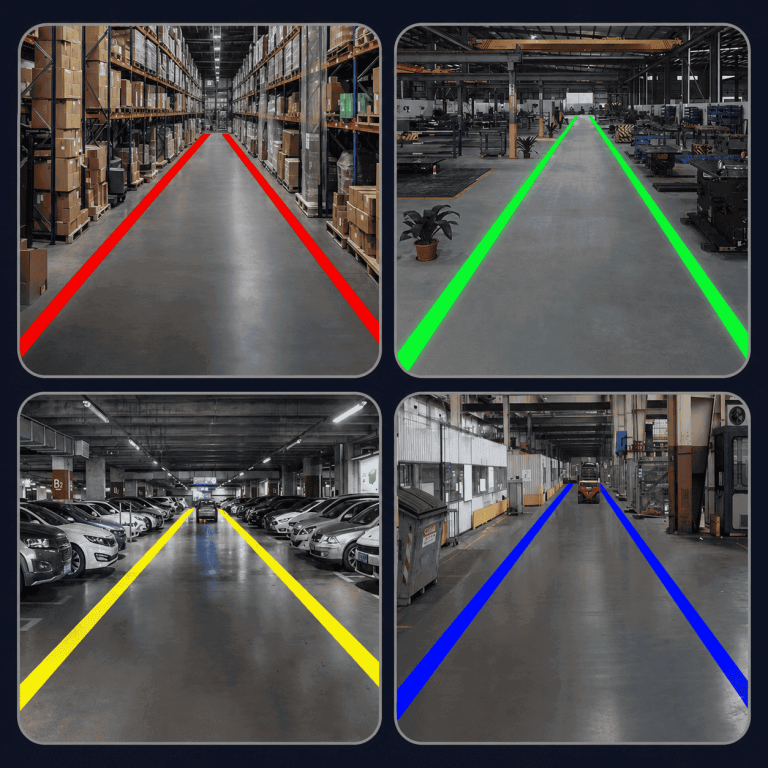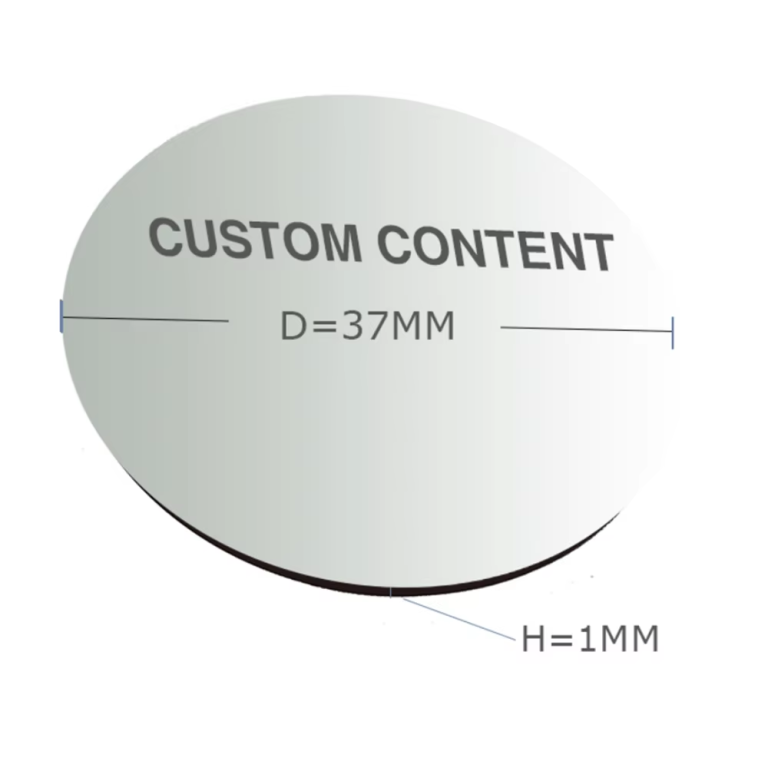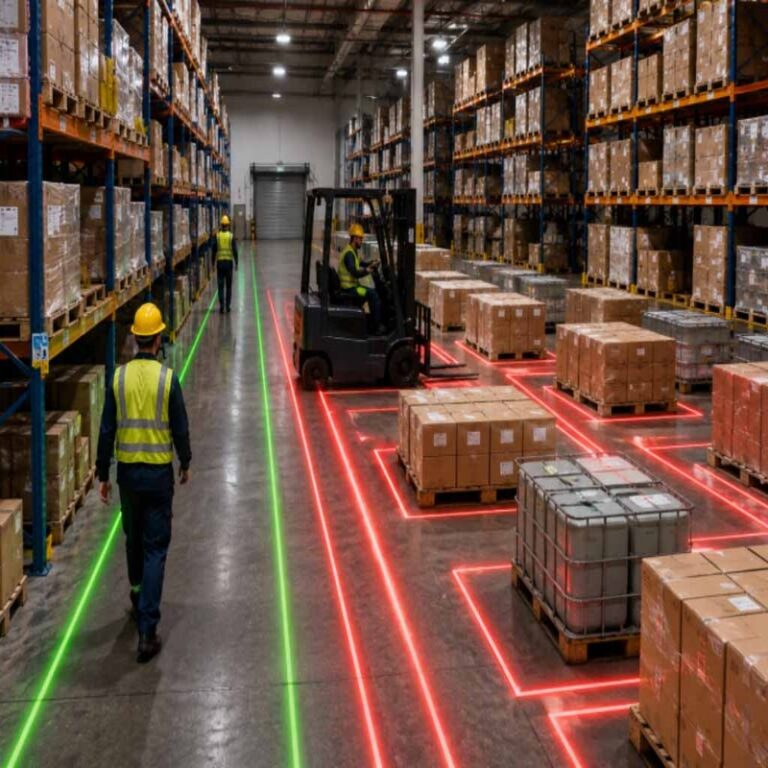

An AGV route can be carefully planned and still be easy to overlook from floor level. In a foundry, people are watching loads, machinery, heat-related work, and the next production task. A vehicle path may be marked, yet the warning has to compete with dust, floor wear, changing light, and materials placed near the route. The problem is not always a missing rule. More often, it is a familiar rule that no longer wins attention at the moment someone approaches the operating zone.
That attention gap is why some sites consider safety projectors as part of their visual management. Instead of relying only on a sign mounted away from the route, a projector can place a warning word or symbol on the floor where the movement decision occurs. The cue does not stop an AGV and cannot control a person’s behaviour. It can, however, make the defined area easier to notice when it is specified for the actual distance, surface, viewing direction, and ambient light.
The distinction between visibility and protection matters. Barriers, scanners, alarms, traffic rules, training, and supervision each have different jobs. Safety projectors belong to the communication layer. They can reinforce the meaning of an AGV zone, but they should never be described as eliminating risk. A site should first decide which control manages the hazard, then decide whether projected information would help people recognize that control or boundary sooner.
An industrial safety projector is most useful when the message is short and tied to a clear action. Sites evaluating safety projectors should avoid packing the artwork with instructions. A compact caution statement, stop symbol, or boundary graphic is easier to read than a full sentence. Artwork must also match the viewing angle. A graphic that looks balanced on a computer may appear compressed when it lands on the floor from an oblique mounting point, so the design and lens choice need to be considered together.
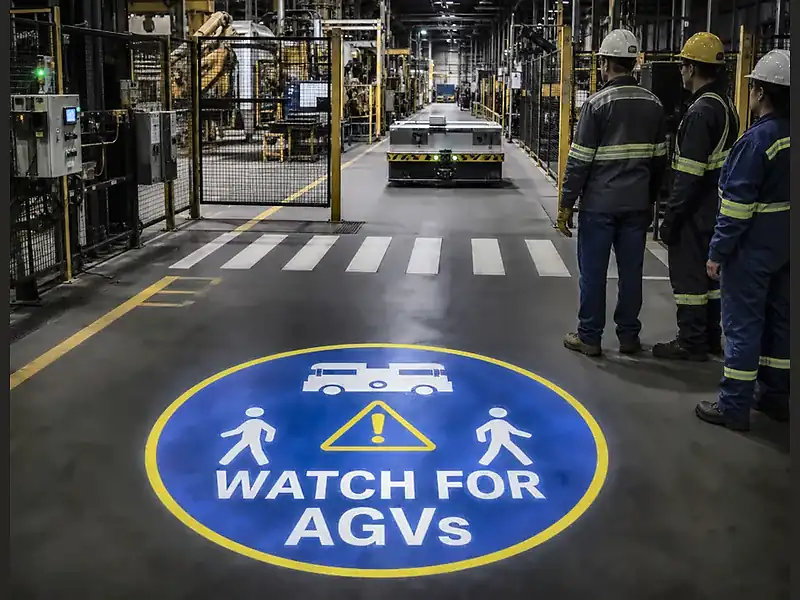
Surface conditions deserve the same attention. Dark or uneven floors may absorb part of the projected image, while glossy patches can change how it looks from different directions. Strong overhead lighting can reduce contrast. Dust and temporary obstructions can interrupt the cue. Before selecting safety projectors, teams should review the floor in normal production conditions, not only in an empty area during a quiet installation window.
A practical example comes from a Chinese foundry project recorded for July 2025. People could enter an AGV operating area, and the customer wanted a warning more conspicuous than a conventional sign. Noparde matched the lens and projection range for the safety projectors to an installation distance of about 3 metres, then prepared a custom message meaning “Pay Attention to Safety.” During site testing, the angle was adjusted so the words stayed clear and covered the intended area. The result was a stable floor warning that made the AGV zone more direct to recognize. The record does not include wattage, unit quantity, measured illuminance, or accident data, so none of those details should be inferred.
That project also shows why an AGV floor warning projector should be treated as a small site system rather than a lamp chosen in isolation. Safety projectors should be specified from the landing area backward: where a person first needs the cue, how large the text must appear, and what may block it. From there, the team can work back to mounting distance, projection angle, lens, artwork proportions, and the most readable colour for the site.
Placement should account for movement as well as geometry. A warning located too close to the vehicle path may be hidden by the AGV at the exact moment it is needed. One placed too far away may lose its connection with the route. Safety projectors should be aimed at a decision point that remains visible from the main pedestrian approach, with the housing installed where routine work is unlikely to strike or cover it.A custom floor warning projector also needs a sensible maintenance plan. Safety projectors can be included in a quick visual check during the normal inspection routine: confirm that the message still lands in the correct area, remains readable, and has not been obscured by a new rack, material stack, or change in process. Lens cleanliness and mounting stability affect clarity. These checks are straightforward, but they keep a visual cue from slowly becoming background noise.
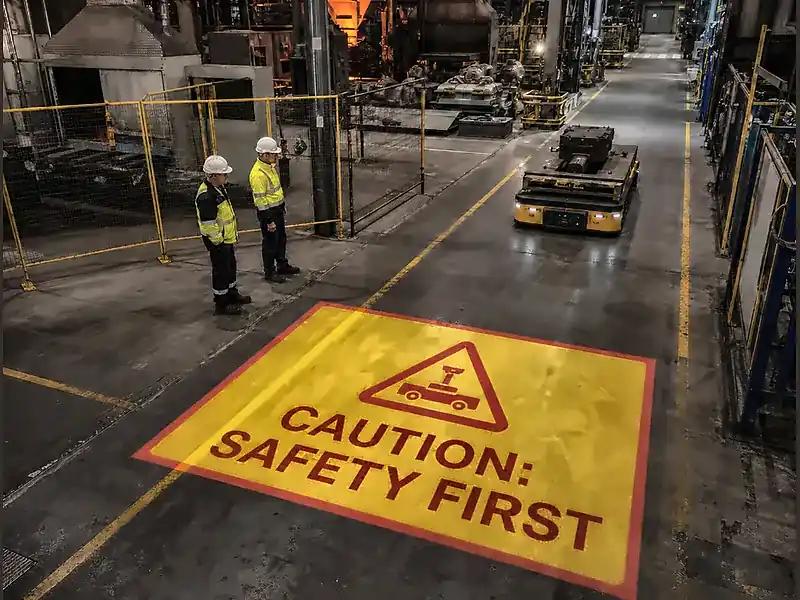
Colour selection is another site decision, not a universal rule. Red may carry a strong warning meaning, but its visibility depends on floor colour, ambient light, and the site’s existing colour system. Green or another colour may be appropriate for a different instruction. Noparde can match artwork and optical choices to the project information, while the facility remains responsible for aligning the projected message with its own procedures and local requirements.
It is also worth deciding how the projection works with paint, tape, signs, and audible alerts. These methods do not have to compete. A painted boundary may define the full AGV lane, while safety projectors add a specific caution message at a crossing or approach. A wall sign can carry detailed instructions that would be too long for the floor. Using each medium for the job it handles well makes the overall visual language easier to understand.
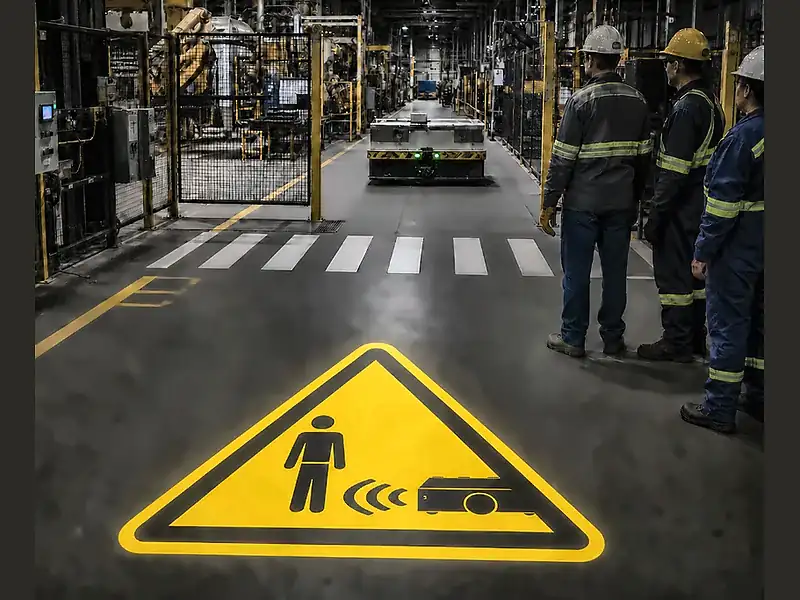
When comparing safety projectors, buyers often begin with brightness, but the stronger questions are more practical. What is the real installation distance? How large must the warning appear? From which direction will people see it? What light reaches the surface during production? Does the artwork need perspective correction before manufacture? Clear answers give Noparde enough information to discuss a suitable lens, message format, colour, and mounting approach without inventing technical certainty that the site data cannot support.
For foundries and other facilities using automated material movement, safety projectors can provide a well-placed reminder at the boundary between pedestrian work and an AGV route. The equipment is most credible when its role stays limited and testable: the warning should be readable, land in the agreed zone, and remain part of routine inspection. That keeps the projected cue connected to real operations and leaves primary risk control with the site’s established safety system.