
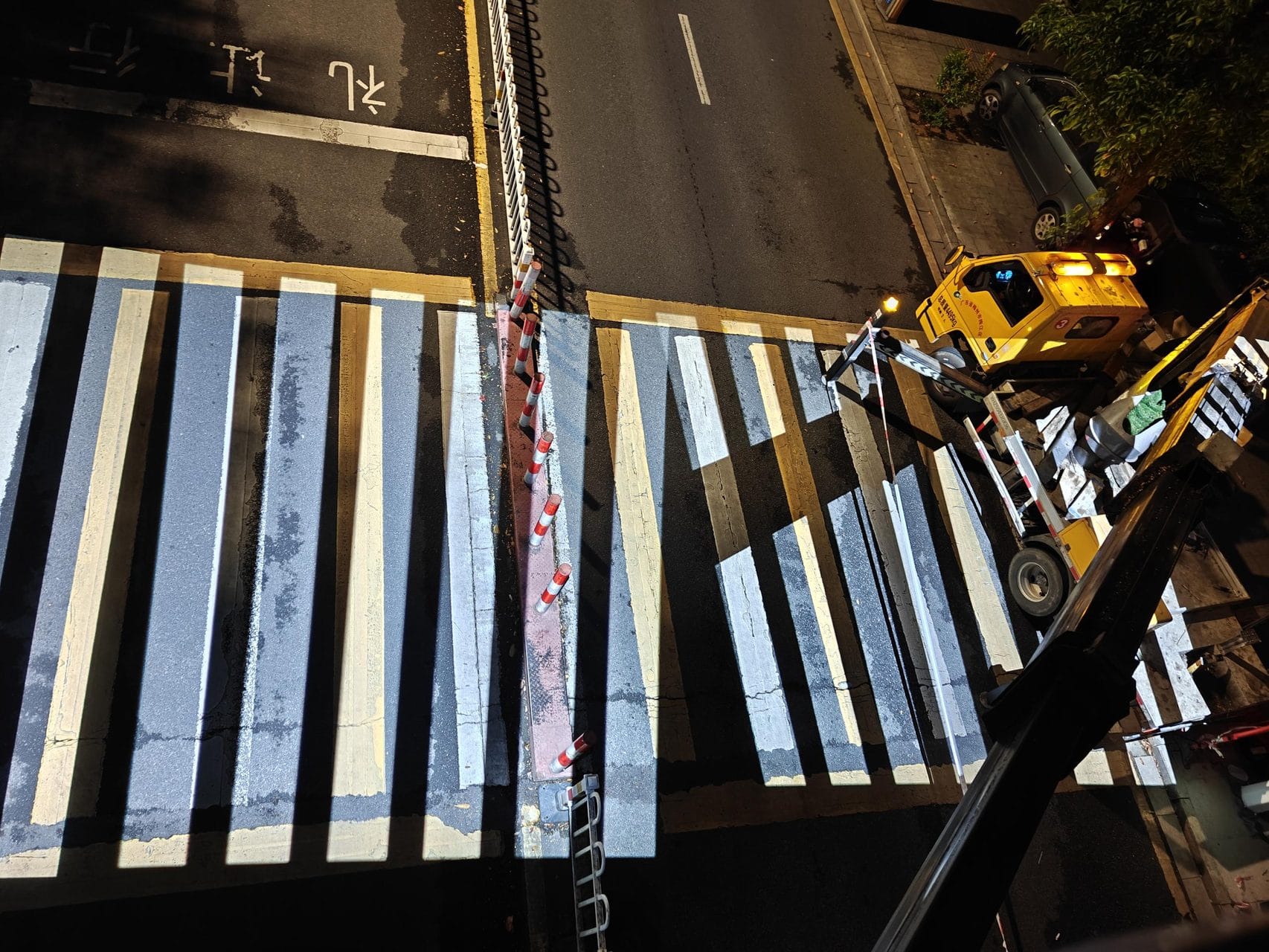
After dark, a crosswalk projector was running at an urban road crossing. It laid bright zebra bars across the asphalt, over a crossing that already has painted markings and a raised median with bollards. This case shows how that projection looked during a night installation visit—without treating projected light as a substitute for site traffic rules.
The crossing at night
The crossing sits on a tree-lined commercial street. Shop signs, streetlamps, an elevated road nearby, and passing vehicles all compete for attention after dark. Painted markings are present on the carriageway, including the words 礼让行人 (“yield to pedestrians”). A raised median with a yellow painted edge and a line of red-and-white bollards divides the two sides of the crossing. White railings run along the sidewalk.
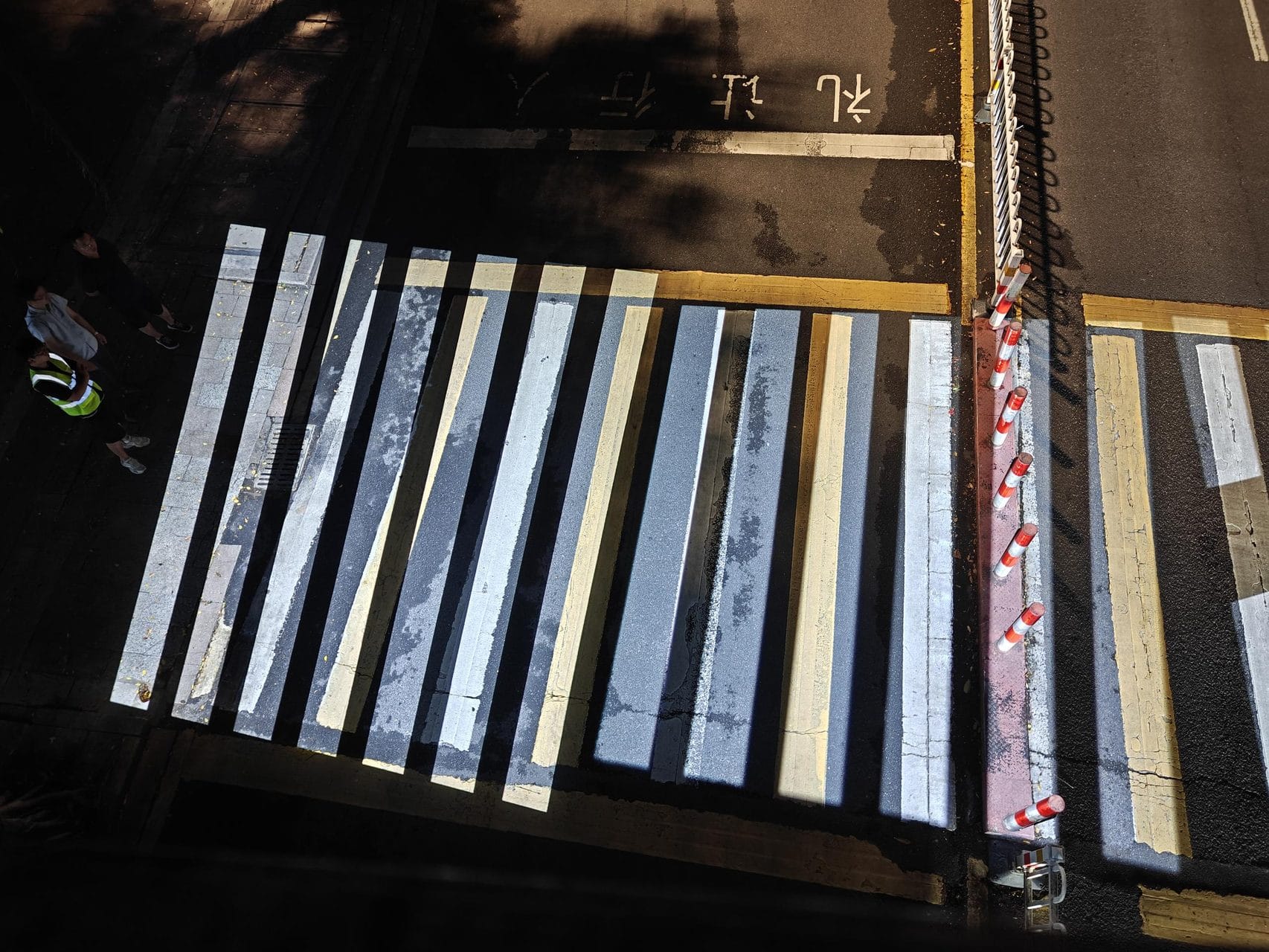
The photographs, taken from above the lane, show the response on the road surface itself: a wide band of bright zebra bars laid across both sides of the median and, on one side, onto the sidewalk paving. The bars are readable against the asphalt and the surrounding street lighting. This is an outdoor public-road crossing, not a warehouse aisle.
What the crosswalk projector put on the road
The main pattern is a zebra crossing: broad bars of light, appearing white in some places and warmer or yellowish in others, that span the carriageway and continue over the median. The light also falls on part of the sidewalk paving.
Painted road markings are also part of this scene. The “礼让行人” lettering is painted, not projected. Worn painted bars are visible in the surface texture in places. The projector’s role, as seen here, is to make a zebra pattern bright and readable at night on a crossing that already has conventional markings—not to replace those markings, the median, or the railings.
No separate green or red pedestrian “pass / no-crossing” messages were recorded in the still photographs or video from this visit.
Notes from the night installation visit
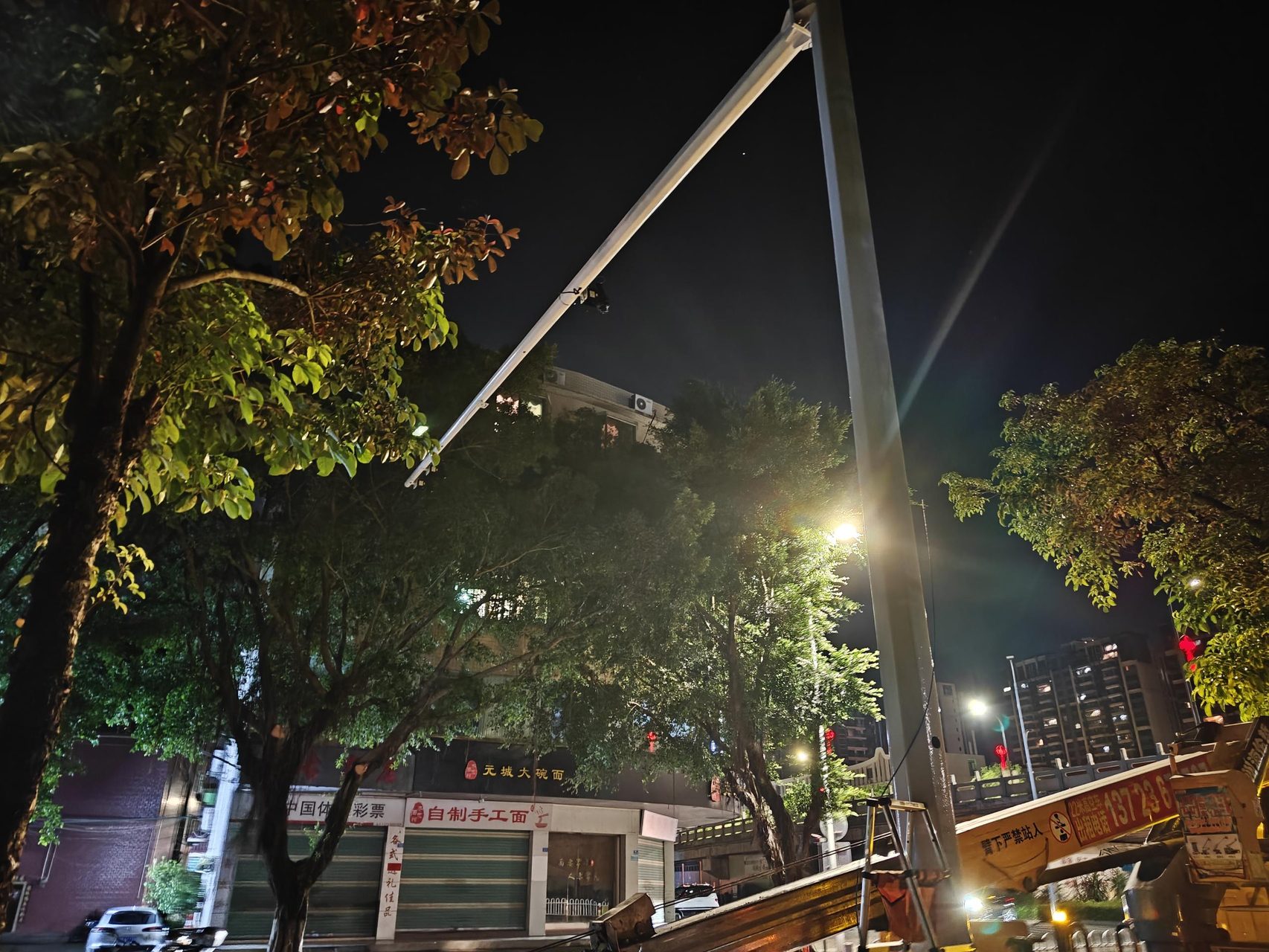
The photographs and video show a team working after dark with an aerial lift. Temporary red barriers, cones, and caution tape were set out around the work area. People in high-visibility vests worked at the base of the pole and in the lift basket along the cantilever arm.
A street-level clip also shows a technician on a stepladder at the roadside pole, with a laptop, while the zebra pattern is already visible on the asphalt. These notes are useful for a similar outdoor road job: plan for night access and an aerial lift if the fixture sits on a long arm over the lane, and allow time to aim the pattern across a median and the full width of the crossing.
This package does not include a written trip report, so this article does not add dates, fixture counts, or other commissioning details that cannot be seen in the photographs and video.
What to check before a similar road installation
A single night-time photograph is not a specification. Before repeating this kind of setup on another road, the following should be confirmed on site:
- The job is an outdoor night crossing. Ambient light from shops, streetlamps, an elevated road, and headlights is part of the scene. For how this differs from a warehouse path, see the crosswalk projector selection guide for outdoor roads and warehouse paths.
- The pattern must be readable on asphalt, including where painted markings and a raised median already occupy the crossing. Bars need a clean edge and enough contrast on both sides of the median.
- Mounting and access. A cantilever arm over the lane may require an aerial lift for installation and aiming.
- Local rules. A projected marking supports visibility. It does not replace painted markings, traffic law, physical separation, training, or the site owner’s duty of care.
Two other outdoor night examples, each with a different street and a different on-road message, are the crosswalk projector case at a road crossing in Fengjie and the crosswalk projector case at a road crossing in Turpan. For an indoor contrast—forklifts and pedestrians sharing a warehouse path—see how a zebra crossing projector can improve forklift and pedestrian safety in warehouses.
If you have a road or plant crossing that needs a clearer night-time cue, contact us with site photos, ambient lighting, and the message you need on the ground.